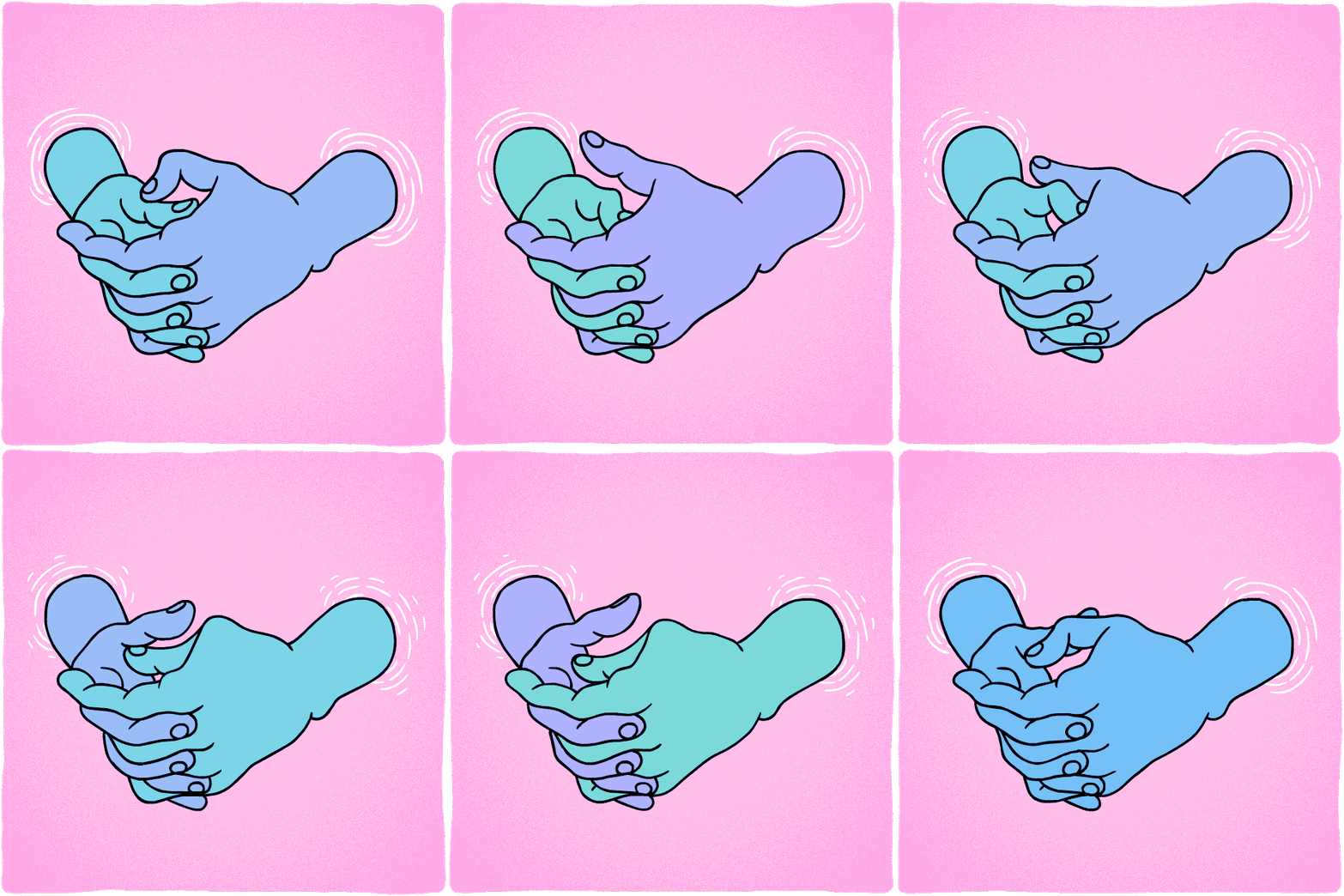
How much time is left? Clearly the teacher doesn’t have ESP or she would sense my agony and ring the bell.
By Martha Henry
I am waiting for the bell to ring.
How many more minutes of this? Clearly my little experiment didn’t work. Taking off my watch doesn’t make me less obsessed with time. Why isn’t there a clock in the room? What if the teacher is off on some reverie and doesn’t notice when to ring the bell?
Why does one person have control over the bell? Why don’t we use a digital clock and remove the opportunity for human error? We could count down the final seconds together, like the ball on New Year’s Eve. We could do it in Sanskrit to make it sound more spiritual.
I am waiting for the bell.
I should buy one of those bowl bells to use at home. I wonder how much they cost? I could buy one online, but I wouldn’t know how it sounds until it arrived. Returning stuff is a hassle. The Tibetan store might have them. I wonder how much they cost? Do the bigger ones sound better, deeper?
I am waiting for the bell.
What if I made my meditation about waiting for the bell rather than following the breath? Would that work in a reverse psychology sort of way? By doing what I’m not supposed to be doing, would I remove all resistance? I am waiting for the bell to ring. I am waiting for the bell to ring. I am . . . I am missing the breath. The breath is so wonderfully dynamic. I am waiting for the bell. I am missing the breath.
I am waiting for the bell to ring.
How much time is left? Clearly the teacher doesn’t have ESP or she would sense my agony and ring the bell. If she were really overflowing with metta and upekkha and all those other words, she’d ring it now and show that she’s a bodhisattva, sticking around town to end my suffering. Waiting. Waiting. Still waiting.
I am waiting for the bell.
Who is this self that is waiting for the bell to ring? Duh, I am the self!
I am waiting for the bell.
What if I got up and whacked the bell myself? Wouldn’t that be kind of Zen-like—spontaneous and loud? Has anyone done that before? Would I be applauded by the other struggling students? Could I’d be expelled from the dharma hall, like getting kicked out of prep school? Cool.
I am waiting for the bell to ring.
I’ve done this enough that I can sense precisely when the time is almost up. I’m going to breathe 10 breaths and the bell will ring within those breaths. One, two, three, okay, bell . . . how about now? Now? NOW!
I am waiting for the bell.
I’m going to use whatever time remains to truly concentrate, to let go of all the fuss and follow the breath. The breath. The breath.
Yes, there it is. This is lovely. This is why I meditate.
Rrrinnggg.
Martha Henry has been meditating for a while. She wasn’t one of those people who took instantly to the practice. In fact, being both inept and a skeptic, she wasn’t certain of any positive effects until after several years of practice. Now she’s pretty sure. She lives in Cambridge, Massachusetts and blogs at Persistent Self.
Who is this self that is waiting for the bell to ring? Duh, I am the self! ~ Martha Henry Share on X
Photo: (source)
Editor: Alicia Wozniak
Did this post strike a chord with you? You might also like:
A Good Resolution : Attention First
If they have convinced us that enlightenment (however it is conceived) is something we have to strive for, with a lot of painful sitting and obeisance to a “master,” let me give us the good news. They are completely wrong. Maybe, at last, this is a message we can all accept.

- Loving-Kindness for the Weeks That Are Too Much - October 6, 2026
- The Finger on the Glass - September 30, 2026
- Fishes’ Eyes Swim with Tears - September 12, 2026
The Cave, the Mind, & the Rescue: A Modern Parable for the West
In Buddhist understanding, there are no saviors who come from above to pluck us out of suffering. There are only fellow travelers, walking the same path side by side.
- Loving-Kindness for the Weeks That Are Too Much - October 6, 2026
- The Finger on the Glass - September 30, 2026
- Fishes’ Eyes Swim with Tears - September 12, 2026
Comments
- Loving-Kindness for the Weeks That Are Too Much - October 6, 2026
- The Finger on the Glass - September 30, 2026
- Fishes’ Eyes Swim with Tears - September 12, 2026