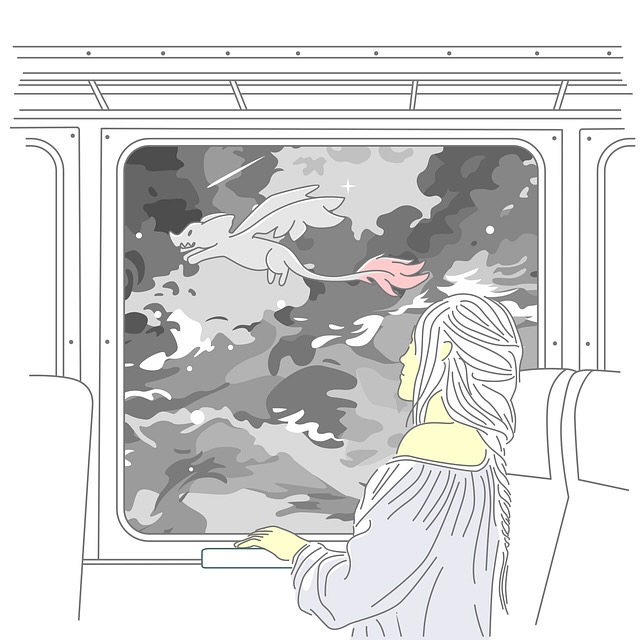
In Celtic Buddhism, this ordinary homeliness is not seen as mere comfort, but a sacred return—a deep longing and sense of belonging known as Dùthchas, a Gaelic term meaning “the place where you belong.” It is the whisper of an ancient wind through oak trees, the rhythm of seasons felt like a song in the blood, and the quiet knowing that you are rooted in a land that remembers your name.
By Aindriú Peers
On the BBC programme Heroes (1986), when asked, Dorothy Heathcote chose Prometheus as one of her heroes.
The interviewer seemed surprised. Prometheus—the bringer of fire—sounded like a grand, mythic choice. But Dorothy immediately brought the conversation somewhere completely ordinary.
“I’m not a career woman,” she said. “I enjoy… looking after furniture, and dusting, you know, and sewing.” She was even sewing during the interview.
“So what,” the interviewer asked, “does this have to do with Prometheus?” She replied: Well, it’s to do with lighting the gas, and putting the kettle on to make a cup of tea.
“You see, the ordinary things always have to be in touch with the awe-full. It’s an extraordinary way to see the world. Lighting a match becomes: a piece of sun. And suddenly Prometheus is there too: good old Prometheus…he fetched me that fire.”
For Dorothy, the ordinary and the awe-inspiring were never separate. Making tea. Sewing. Dusting a room. Lighting a flame.These are not trivial things, if we really attend to them. The ordinary and the awesome go side-by-side.
Dorothy never treated drama as escape from ordinary life. Instead, her work constantly revealed the depth already present inside everyday actions, relationships and responsibilities. The extraordinary is not somewhere else. It is already here—waiting to be noticed. Even the smallest human acts may carry “a piece of sun.”
–
Dorothy refers to Prometheus in the interview above, but she could just as well have said Belenos, the Celtic Sun god. Or a host of other archetypes, even from the Christian tradition.
In Celtic Buddhism, this ordinary homeliness is not seen as mere comfort, but a sacred return—a deep longing and sense of belonging known as Dùthchas, a Gaelic term meaning “the place where you belong.” It is the whisper of an ancient wind through oak trees, the rhythm of seasons felt like a song in the blood, and the quiet knowing that you are rooted in a land that remembers your name. This feeling of belonging and intimacy with the land encourages practitioners on the path to enlightenment.
This is no passive nostalgia. It is a melancholic song of home, carried by the cry of the curlew, binding people, earth, and culture into their own living tapestry. Like the owl in Domhnall mac Fhionnlaigh nan Dàn’s poem, the spirit moves through the glens and rivers, a witness to the unity of all things—past and present, human and wild. It is therefore also right here in our dwellings, in our own hearts.
This approach allows practitioners to feel at home in their cultural context while exploring the eternal present, balancing the need for spiritual transcendence with the human necessity of returning to Mother Earth and daily life.
Though the path leads to emptiness beyond form, this earth is both our first teacher and the last. The velvety feel of moss on stone, the shift of light at dusk—these are the handrails guiding us forward in the darkness and confusion of our times.
We do not flee the world, but learn to love it fiercely, returning again and again to the soil, not in defeat, but in devotion. And we gradually learn to see through it as through a veil, to overlook and see beyond it, to Tír na nÓg, to Parinirvana, immediately accessible here and now.
For in this rootedness, courage is born—the bravery of the Fianna, the warrior-poets who faced the unknown not with detachment, but with fire. To dwell in Dùthchas is to stand in the thin place between worlds, where the spirit breaks through, and the soul remembers: we were never exiled.
We can relax, we are already home.
Photo: Pixabay
Editor: Dana Gornall
Did you like this post? You may also like:
An Eye for an Eye: Right Thought from a Celtic Perspective {The Eightfold Path}
Authentic Spirituality Means Connecting with Our Ordinary, Mundane Life.
Comments

- Mind the Gap! - August 20, 2026
- Celtic Buddhism – the Extraordinary in the Ordinary - June 3, 2026
- The ‘Celtic’ in Celtic Buddhism - May 19, 2026