
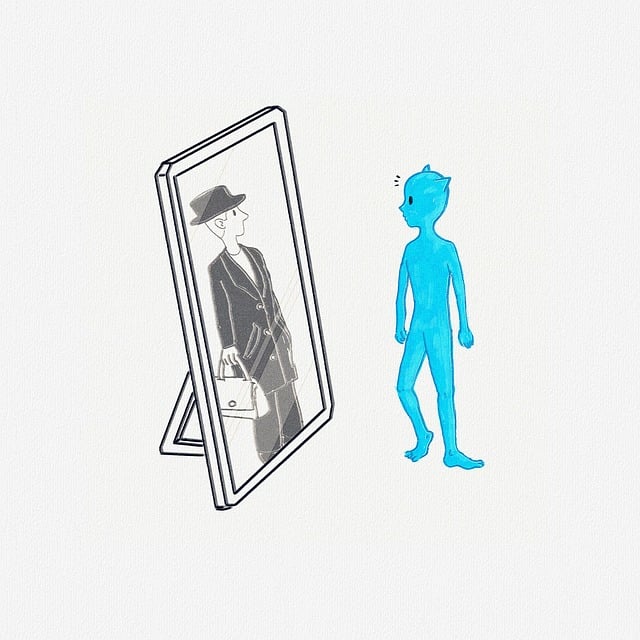
Perhaps the most compelling thread in Baez’s thought is that transformation is less about becoming someone new than recovering something that has been obscured. The roles fall away. The diagnoses fall away. The inherited stories fall away.
By George Cassidy Payne
“Who are you?”
It sounds like the simplest of questions. Yet for Will Baez, it may be the most difficult, and most important, question we can ask.
Baez has spent decades working in the fields of psychology, spirituality and human suffering. He has been a Methodist pastor, psychologist, professor, seminary student and spiritual guide. His work has brought him into psychiatric hospitals, churches, universities and addiction settings, where he has encountered people experiencing some of the most extreme forms of human suffering.
But increasingly, his attention has turned toward a different question. What happens when a person is no longer simply trying to survive?What happens when the work shifts from managing symptoms and behaviors to discovering who we are beneath the identities we have accumulated?
Baez describes this as a movement toward self-actualization—and, more fundamentally, toward identity.
“I am who I am,” he says, returning to the ancient biblical language associated with Moses and the name of God. For Baez, this is not merely a theological statement. It points toward a way of being: presence without disguise, identity without unnecessary distance between ourselves and the world.
His approach has been shaped by Christianity, psychology and an unusually broad encounter with the world’s religious traditions. During his years at the Colgate Rochester Crozer Divinity School, he found himself moving between different racial and cultural worlds while also encountering Black studies and women’s studies. As a Puerto Rican man navigating what he experienced as a largely Black-and-white cultural framework, he became increasingly aware of how identity is formed—and how deeply stigma can become internalized.
But his spiritual life had already begun moving across boundaries.
He had encountered Islam, Buddhism, Sufism and Hinduism before returning more consciously to Christianity. He jokes that Jesus took him on a “magical mystery tour” through other religions. He also draws inspiration from Thich Nhat Hanh’s idea of being “twice rooted,” suggesting that in an increasingly interconnected culture, we may be “thrice rooted”—drawing nourishment from multiple spiritual streams without necessarily abandoning our original one.
Beneath these traditions, Baez senses what he describes as an underground river: something deeper than the institutional boundaries separating religions. That intuition brings him surprisingly close to Buddhist language.
The layers of who we are
Baez describes human identity as existing in layers. First, there are our roles: psychologist, parent, spouse, professor, pastor, and then our beliefs and values: what we stand for, what we consider meaningful, what we believe about ourselves and the world. There are our capabilities and behaviors: how we think, feel and act. But beneath these layers is a more fundamental question: Who am I?
For Baez, the deepest answer is connected to what he calls the “ground of being.” In his Christian vocabulary, this might mean being a child of God or a disciple of Jesus. But he is interested in what remains when even those descriptions are examined. The question is not simply What do I believe? It is Who is the one who is believing?
This is where his thinking begins to resemble the Buddhist practice of self-inquiry. He references the Indian tradition of asking who we are by progressively recognizing what we are not. Eventually, the question itself can begin to dissolve. We no longer need to continually ask who we are because we are fully present.
“You have opened up,” he says. “You do not have to seek anymore.” The goal, then, is not to construct a better personality, but to become more fully present to the life already unfolding through us.
Suffering as disconnection
This perspective changes the way Baez understands suffering. He has worked with people experiencing schizophrenia-spectrum disorders, trauma, addiction, abusive relationships and extreme emotional states. He is careful about the order of the work. Before asking someone to explore profound questions of identity, a person may need safety, stability and the ability to manage thoughts, emotions, relationships and daily life.
Only then can deeper questions become possible.
For Baez, some forms of suffering involve becoming disconnected from one’s sources of identity and meaning. A person can become lost in trauma, addiction or an imposed identity. They can become so fused with a diagnosis, role or belief that the description begins to feel like the entirety of the self.
“I have depression.”
“I am an alcoholic.”
“I am schizophrenic.”
The distinction may seem grammatical, but for Baez it is existential. There is a difference between experiencing something and believing that the experience completely defines who you are. This is not an argument against diagnosis or treatment. Rather, it is an argument against reducing a human being to any single description.
The danger of spiritual bypassing
Baez is equally skeptical of spirituality when it becomes another form of avoidance. He speaks about emotional bypassing: the tendency to use spiritual ideas to move around rather than through difficult emotional experience. Someone may become detached from their feelings, intellectually incurious or emotionally unavailable. They may speak about patience without knowing what they are actually being asked to be patient with.
Real transformation, in Baez’s view, requires contact with experience. “You have to suffer to get through suffering,” he says. That does not mean seeking suffering. It means refusing to anesthetize ourselves against the realities that might teach us something. He recalls an image from a Kundalini yoga teacher who once described a dream about Baez standing on the highest level of a building—but without floors beneath him. He was walking on beams.
The message was simple: spiritual height without psychological grounding can become dangerous.
We need floors.
We need embodiment.
We need integration.
This is especially important when people engage in intensive meditation or spiritual practices that can become psychologically overwhelming. Spiritual experience, Baez suggests, cannot substitute for the developmental work required to integrate that experience.
Holding space
Perhaps the most Buddhist dimension of Baez’s work is not a particular doctrine at all—presence. His doctoral-level interns once told him that what distinguished him most was his presence. When he is sitting with one person, he says, it can feel as though nobody else exists. He is holding space.
Baez references the Hindu image of the guru holding a space that the disciple cannot yet hold for themselves. He is careful, however, not to call himself a guru. Instead, he sees his role as developing enough inner capacity to accompany another person until they can inhabit that space themselves. There is something deeply relational in this.
Healing does not always begin with advice. Sometimes it begins with another human being being fully there.
Crossing the river
Baez also returns to the Buddhist metaphor of crossing a river. A person may glimpse another way of being—peace, freedom, unity, awakening—and then lose contact with it. They want to return, they try again. They become frustrated because they cannot reproduce the experience. Eventually, however, something changes. The river is crossed. And once it is crossed, there is no longer the same compulsion to return.
Baez connects this image to the Christian story of Paul, who wrestles with whether he should remain alive and continue his work or depart and be with God. Baez sees in this a willingness to remain in the world after glimpsing something beyond it—a movement that resembles the bodhisattva ideal of returning to the world rather than escaping it.
The point is not transcendence for its own sake. It is incarnation, to become fully present here. Now. In this body. In this life.
Coming home
Perhaps the most compelling thread in Baez’s thought is that transformation is less about becoming someone new than recovering something that has been obscured. The roles fall away. The diagnoses fall away. The inherited stories fall away.
Even our spiritual identities may eventually become less important. What remains? Baez returns to the ancient words: “I am.” There is no need to decorate them. No credential follows them, no diagnosis. No title. No religious label. Just presence. For someone who has spent decades accompanying people through psychological crisis and spiritual searching, Baez does not suggest that we will ever permanently arrive at some perfect state. A self-actualized person can still be sad. They can grieve. They can struggle.
Awakening does not make us less human, but perhaps it makes us more fully human. Baez describes human development through the image of a flower. First there are roots beneath the ground, then a stem and then leaves. Eventually, a flower opens toward the sky. The entire process is nourished by the same ground.
We are not required to become something other than what we are. We are invited to grow into what we already contain, and perhaps that is why the question “Who are you?” remains so powerful. It’s not because we need another label, but because, beneath all the labels, there may be something waiting to be remembered.
Something quieter than identity. Something deeper than belief. Something that does not need to announce itself. Something simply present.
“I am.”
Photo: Pixabay
Editor: Dana Gornall
Did you like this post? You may also like:
When Pain Pretends to Be Truth: The Dark Self Signature Loop
Comments

George’s essays have appeared in publications such as The Good Men Project, The Buffalo News, The Rochester Democrat & Chronicle, and many more. A poet at heart, his work often blends memoir, philosophy, and theological reflection, rooted in the belief that language can be both a balm and a spark.
Whether reflecting on the writings of Marcus Aurelius, the parables of Jesus, or the mindfulness of a Jain monk sweeping the ground before them, George writes to make space for wonder, doubt, and dialogue.
He joins The Tattooed Buddha as a regular columnist to explore themes of death, inner peace, activism, grief, and contemplative life in a world on fire—and to ask, again and again: How can we live as if everything we do matters?
- Who Are You Beyond Your Labels? - August 19, 2026
- From Space Earth Looks Almost Unchanged, From Within Every Moment is an Opportunity - July 20, 2026
- Trauma and Remembering How to Heal - July 9, 2026





when i read this article, it leaves me with a lot of thoughts. but one of them is, “Where is he getting all of this stuff from?” it feels like there is some text, or interview, or podcast or SOMETHING that is from Will Baez, and it is not directly referenced here. What is the source of Baez’s thought that you are quoting from?