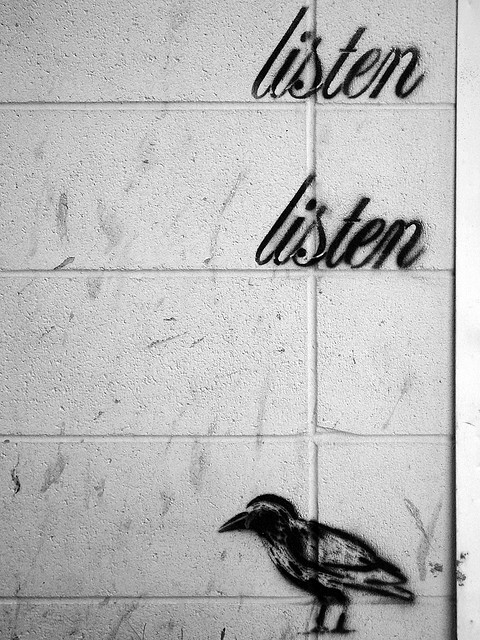
Melancholia and sadness come from our awareness of impermanence, and how attachment will ultimately lead to suffering.
By Rob Argent
Listening to yearning, melancholic songs is almost a rite of passage for any music lover, even if we look back and think “what was I thinking listening to that?”
Whether it’s introspective indie like Radiohead or Jeff Buckley (yes comma I’m showing my age here) or sad bangers built for the dance floor such as Robyn or Frankie Knuckles (really showing my age here!), lyrics focusing on negative situations and feelings have always held a place in our hearts.
And our minds too, apparently, as studies have shown that when we listen to sad tunes we’re actually rehearsing being with feeling down. The same has been found with aggressive songs, which certainly helped me understand why I can sit on the cushion and then pop on a metal album afterwards. Who knew that I was actually continuing my practise every time that I followed my meditation with an A Perfect Circle record?
While the Buddha didn’t suggest any specific musical genres that would help attain enlightenment—although my money would be on either ambient techno, dub or alternative metal—he did offer teachings on how we can work with sadness in our lives.
In learning to ride the waves of our different emotions we can develop a sense of equanimity, embracing both the ups and downs of life rather than chasing the highs and fleeing the lows.
Despite our desire to sometimes want to banish the more difficult, uncomfortable aspects of our thoughts and feelings, in reality we can’t ever be truly free of them. If anything, the more we fight our feelings the stronger they become.
So why choose to listen to the miserable rainy-day playlist instead of the unrelenting optimism one? Turns out, it provides us with a chance to recognise when sadness arises in us, so that we can embrace it instead of repressing or avoiding it. So when the token ballad comes on during your next listening session, maybe don’t skip it, and take the chance to really be with the emotions it brings up.
Melancholia and sadness come from our awareness of impermanence, and how attachment will ultimately lead to suffering.
After all, many a downbeat song is about lost love, and how the singer can’t accept it. It wouldn’t be a romantic number if the lyrics told the story about a relationship ending and both people being completely fine with it!
This practising mindfulness also gives us an opportunity to analyse and experience the feelings in a very real way, a felt way as opposed to a purely theoretical way that is often prioritised in the western world. Instead of working towards a set goal of identifying, processing and resolving emotions like it’s some kind of job, we can opt for simply living each feeling as it comes along. Without any defined timescales or objectives, we’re free to take our time in noticing how we encounter the world rather than being distracted by external stimulus.
The use of sati (inner awareness) let’s us stop the mind from being carried away with thoughts and feelings that arise unexpectedly, so that we can investigate why we feel sad at times. Hearing a certain song can remind us of past difficulties or take us back to a time or place that is now gone, or simply be so good at pulling our heartstrings that we can’t help but be carried away by it.
It’s easy to be drawn into sammitisacca, or the everyday reality we operate in, as opposed to seeing through to the paramatthasacca (the deeper, more experiential reality that offers true insights). So if we’re going to be visiting there for the length of a song or two, can we take something useful away from it while we’re there?
At least while we’re there, we know the soundtrack will be good.
Photo: Pixabay
Editor: Dana Gornall
Did you like this post? You may also like:
The Surreal Life of Mind: Using Music to Remember Who You Are
Enlightened Playlists, or Why Listening to Albums is Good for You
Comments

- Songs of Suffering, or Why Sad Songs Can Help Us in Our Practice - October 16, 2026
- Sticking it to the Man, or Right Livelihood in the Modern Age - September 4, 2026
- Enlightened Playlists, or Why Listening to Albums is Good for You - August 7, 2026