In short, we were told God demanded that we avoid taking blood into ourselves to preserve our lives. Their reasoning wasn’t great: it involved interpreting Bible passages on dietary restrictions in broad, medical terms. But not obeying it resulted in being removed from the congregation. You broke God’s commandment. Your friends and family would be required to shun you. The goal was to make you so miserable you’d repent and resume obedience. Otherwise, you were as good as dead.
By David Jones
In 1992 I chose to become one of Jehovah’s Witnesses.
In 2008, I chose to leave rather than stay and endure regular counseling over various infractions—some true, some not. I’d lost all my joy in teaching and serving my congregation. The proverbial writing was on the wall. It was in everyone’s best interest that I left. I have fond memories of it, though. Parts of my time were great, and I still care about folks who remained after I left. My time there was simply finished. I hope my old friends are well.
But something happened recently. On Friday, September 18, 2026, the religion’s leaders (the Governing Body) made a huge change to one of their cornerstone doctrines, and it’s still sending shockwaves through the religion.
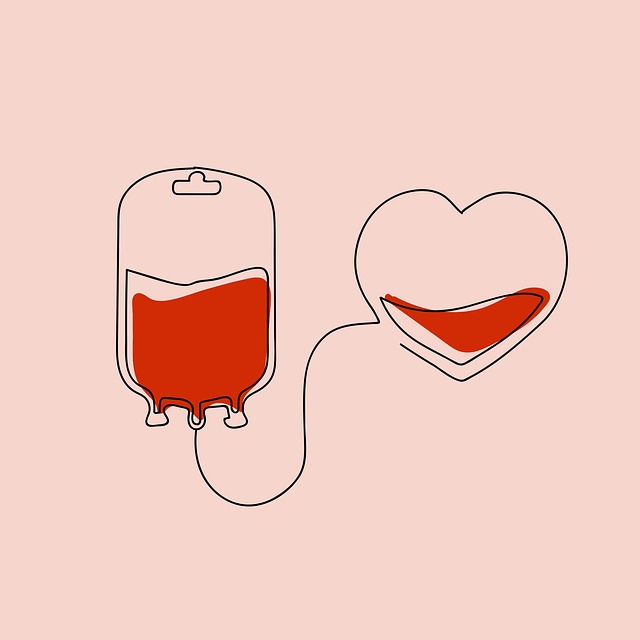
For decades, members couldn’t accept a blood transfusion.
We all carried little cards (we called them Blood Cards) that were legal documents outlining our refusal to accept transfusions of whole blood as well as any therapy or treatment that involved any of its four major components: red cells, white cells, platelets, or plasma.
In short, we were told God demanded that we avoid taking blood into ourselves to preserve our lives. Their reasoning wasn’t great: it involved interpreting Bible passages on dietary restrictions in broad, medical terms. But not obeying it resulted in being removed from the congregation. You broke God’s commandment. Your friends and family would be required to shun you. The goal was to make you so miserable you’d repent and resume obedience.
Otherwise, you were as good as dead.
This was true on Thursday night, September 17th. By the next evening, accepting a transfusion of whole blood was still forbidden, but “after prayerful consideration,” the Governing Body decided accepting any of those four separate components was now a conscience matter, a personal decision that no longer carried any punishment or stigma. It was presented as “brighter light” of understanding from God.
Those components, which had been “against God’s will,” were suddenly just up to you to accept or not. And folks who have lost a parent, a friend, a relative, a child for refusing blood in the past are now asking what happened here. Those who died were always referred to in martyr terms, dying faithful to God, eligible for future resurrection. Now folks ask, did they really have to die? Did God change his mind, or did men?
This sudden change came as the Organization was suing the Japanese government over a 2022 policy: parents refusing medical treatment for their children could be seen legally as neglect or abuse. Now, if a Witness refused blood components, the Society could say in court “We didn’t make them do anything. That was all their decision.”
I began hearing how folks were suffering with this. Anyone who lost someone under the old policy is understandably sad, angry, confused. I wanted to write about it, but maybe this wasn’t my fight. I can’t truly know their pain. Maybe I should just stay out of it.
Then I had a dream.
In it, I was a gay man having a rendezvous with another man in an hourly-rented room. Before anything got started, a couple of women came in for their own meeting. Then another couple of women came in. Each time a new couple came in, a bed suddenly appeared for them. (A bit awkward.)
We all felt the rental minutes ticking away, so we decided to make good use of the time remaining. Suddenly the wall slid open like a large garage door, and a group of Nazis stepped in. They began to bind us for their own violent intentions. I hid my face with a sheet, only to find it transparent. We all began crying.
Suddenly I saw a chain nearby. I grabbed it, and it turned into individual golden chain links, so I began throwing them at the Nazis until they left. I got up and started tending to the others, undoing their bonds and holding them. Then I woke up.
That’s just a summary, but the meaning was clear: I wasn’t untouched by others’ suffering. I’m not a gay man, but the dream cast me as one to remove that layer of intellectual detachment I felt toward these ex-Witnesses. They’re suffering. I’ve suffered before, I’ve lost loved ones, I’ve spent long nights trying to understand things I couldn’t quite. That’s where compassion is born. Many Buddhists see that “separation” as an illusion anyway.
I wanted to write about this, but hesitated.
Particularly, I didn’t want to leave myself open to the accusations Watchtower levels against anyone who left—that ex-Witnesses are enemies of God, consumed with evil. Any complaint is used as proof of persecution.and hatred of God and God’s organization. I didn’t want to feed that. But the dream showed me that trying to dodge those accusations is flimsy and illusory thinking, like holding up a transparent sheet to escape being seen.
So I’m going to add my voice to those who demand a religious organization own up to the pain and misery they cause under the guise of divine will. We’re all related through our humanity and the suffering that comes with it. I’ll embrace what my dream reminded me about that relationship. And if I’m labeled a bitter apostate, then that’s on them.
I understand why folks will remain in the organization and defend this change. I understand why some will disagree but remain and keep quiet. And I understand why folks will leave, and why others will say they can’t understand why anyone would give up their lives over a religious doctrine.
But I’m done being quiet about this religious group. I will stand with those suffering victims.
Photo: Pixabay
Editor: Dana Gornall
Did you like this post? You may also like:
Comments

- A Change in Stance from Jehovah’s Witnesses, and a Dream of Compassion - October 9, 2026
- Bringing the Religion We Practiced Before Onto the Path - May 29, 2026
- The Gender Trap - April 2, 2026