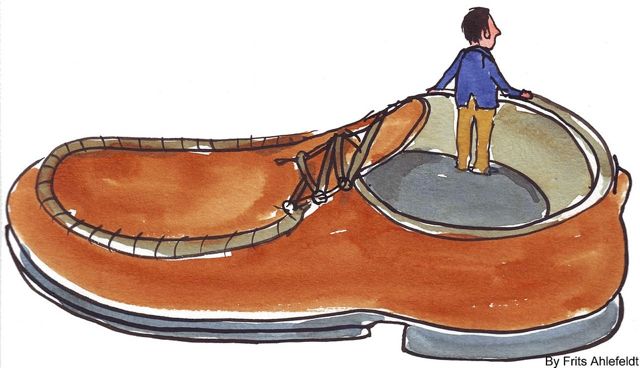
No matter how hard I work there will always be someone with more skills or a better knowledge base. Thus, there will always be countless people who have more value than I do in a capitalist system. So, if my feeling of self-worth is tied to my job title or how much money I make, then I’ll always be disappointed.
By Sensei Alex Kakuyo
I was perusing Facebook the other day when I came upon the following question, “How do you maintain a sense of intrinsic self-worth within capitalism?
This is a deep question, and it’s an important one for our time, because within a capitalist system each of us has a price tag; just like a car or a pair of shoes. Based on our level of education, our skillset, and our ability to interview well, the market decides our “value,” which gets expressed in the salary our employer pays us.
For example, I support myself by working as a business analyst, and I spend countless hours chatting with coworkers about what degrees or certifications will increase our market value. Naturally, these talks always happen just before year-end reviews when we’re trying to negotiate raises. And the same is true of other industries as well (banking, healthcare, education, etc.).
There’s nothing wrong with this on the surface. In fact, it can be fun to try and “game the system.” But it does create a problem. No matter how hard I work there will always be someone with more skills or a better knowledge base. Thus, there will always be countless people who have more value than I do in a capitalist system.
So, if my feeling of self-worth is tied to my job title or how much money I make, then I’ll always be disappointed.
However, if I recognize capitalism for what it is, a game, then a healthy boundary forms. I understand that I have a value within a capitalist system, but that’s not my value as a person. Rather, my personal value and self-worth come from the fact that I, like all sentient beings, am a Buddha.
To be clear, everyone who’s reading this is also a Buddha—this is our true nature in the same way that it’s the nature of water to be wet.
There’s no need to worry about our worth in a capitalist system because our Buddhahood is unchanging. Regardless of our salary or our skill-set, we are valuable, and our existence is sacred because all life is sacred. This is the grace that Buddhism provides.
When we accept this grace into our lives, everything changes. Questions about self-worth disappear, and we’re able to able to live joyfully in this present moment. We can see this if we look at nature. The moon never questions its value to the world; it doesn’t compare itself to the sun or wonder if people enjoy looking at it.
The moon knows that it’s a Buddha. So, it doesn’t compare itself to others. Instead, it shines fully and completely each night; lighting up the darkness for the rest of us.
Similarly, we all have a Buddhanature that burns brightly within us, and as we practice that Buddha becomes a beacon of light in the world; ending suffering with every smile, every compliment and every kind gesture that we make.
That’s where self-worth can be found. It doesn’t come from the capitalist system outside of ourselves. Rather, it comes from the Buddha within.
The moon never questions its value to the world; it doesn't compare itself to the sun or wonder if people enjoy looking at it. ~ Sensei Alex Kakuyo Share on X
Photo: Pixabay
Editor: Dana Gornall
Did you like this post? You might also like:
Comments

You can follow him by visiting his blog, The Same Old Zen and on Twitter: @sameoldzen
- The Thing Within Us That Lives Off Conflict - February 6, 2025
- The Need for Intolerance - December 16, 2024
- Doing the Work and Planting the Seeds - December 9, 2024