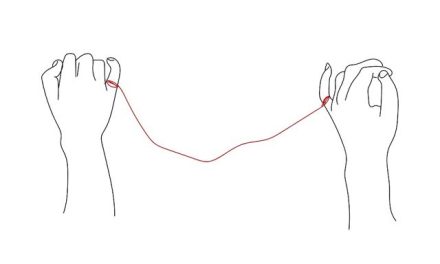
In Nyingma traditions, Karma isn’t some cosmic scorekeeper just waiting to slap you back. It is the natural unfolding of consequences created by your action. The word Karma means “action” and simply states that your actions (no matter the intention) create other actions in an interconnected chain.
By Kellie Schorr
Author’s Note: Please note that the point of this article is not to “re-try” the crimes of the three women discussed. They have all had their day in court. It is about examining our understanding of justice with each case.
One of the great things about working in a co-working building is that I get to know and chat with people in different professions and walks of life than myself.
Although we each have our own jobs to do, we thrive in diversity.
Not long ago I got in a conversation on personal beliefs with an office friend who is a Southern Baptist. It was a very respectful and well-meaning talk between a Baptist and a Buddhist that ended somewhat predictably.
Him: What if you are wrong and you go to hell?
Me: I don’t believe in a literal hell.
Him: What happens when you sin?
Me: I don’t believe in sin.
Him: But if you don’t believe in sin or hell, how do you make good decisions? How do you choose right or wrong? What happens to people who hurt others? How can you have justice if you don’t believe in hell?
I explained that in many lineages of Buddhism we aren’t too interested in labeling people as “good” or “evil” but we ask whether an action causes suffering or relieves it. We aren’t morally apathetic, but we examine intention, action, and interdependence as part of the situation. To harm is to bring suffering. When we bring harm, there is a formula that we use:
- Acknowledge our wrong and accept the accountability that comes from it. If you break the second precept and take someone’s money through fraud, you should acknowledge the wrong and be held accountable by possibly going to jail.
- Experience remorse for what we did. Remorse is different that regret. Regret looks directly at the self and wishes things had gone differently. Remorse looks at the others, the suffering that has been caused and the connection that is damaged and feels sorrow.
- Make amends or repair what has been harmed as a result of our action. Amends are a conscious action of repair or transformation.
He nodded and walked off, thinking about what I said and, unsatisfied with my answer, probably still convinced I’m going to hell. Later, I looked at the nice, neat formula for correcting wrong acts, and thought of three legal cases currently dominating the true crime media. I realized nothing, especially not Buddhism, is as easy as it sounds.
The three cases that challenge many of us are:
Elizabeth Holmes, convicted of defrauding Theranos investors through her claims of an invention that would give medical results from one drop of blood. She was convicted of financial crimes, not medical ones. However, patients were harmed by receiving inaccurate results involve cancer, pregnancy and HIV.
McKenzie Shirilla, a 17-year-old girl who crashed her car into a brick wall at a consistent speed of over 100 mph causing the death of 2 young men. She was found guilty of murder in what was substantiated by the court to be an intentional act.
Lyndsay Clancy, put on trial for 3 counts of murder and strangulation in the death of her children. Though the proceedings ended in a mistrial, there is no question they died at her hand.
Each one of these cases, in different ways, challenges the system by which we resolve the suffering we cause in the world, and makes us ask about justice when the ultimate punishment doesn’t hold an answer.
Nothing to be Guilty For – The Denial of Elizabeth Holmes.
The first step in a justice process is to accept something wrong has occurred. But how do we understand the path of correction if the person involved doesn’t admit they did anything wrong.
Although Elizabeth Holmes was found guilty of financial criminal acts and witness testimony displayed the harm done to others either through corporate bullying or wrong test results, Holmes maintains there was nothing wrong. She steadfastly, delusionally, continues to suggest that she simply ran out of time before the machine could work or that investors misunderstood what she was promising.
How do you compel someone to act honestly if they won’t acknowledge they lied in the first place? By understanding karma doesn’t require her admission to being to ripen.
In Nyingma traditions, Karma isn’t some cosmic scorekeeper just waiting to slap you back. It is the natural unfolding of consequences created by your action. The word Karma means “action” and simply states that your actions (no matter the intention) create other actions in an interconnected chain.
Holmes may never say she lied or she harmed others, but the results of her actions (Theranos collapse, international exposure, patient harm, prison term) are already in process. Justice does not depend on our acknowledgement. It, in some way, happens anyway.
Sorry, Not Sorry – McKenzie Shirilla’s Stunted Empathy
In the tragic deaths of Domonic Russo and Davion Flanagan, there is no question that McKenzie Shirilla was driving the vehicle and it went at high speed straight into a brick wall. The courts have found her to have done so intentionally, and she is incarcerated until at least 2037.
As seen in Netflix’s documentary The Crash and other interviews with family, fellow inmates, and former friends, while McKenzie continues to deny memory about the exact moments of the crash, she has expressed regret for her own lost freedom, comfort, and future. Shirilla comes off as extremely sorry for herself, but she has not displayed credible remorse over what happened to the boys and their families as a result of her actions.
There is a case for a lens of compassionate understanding she is rarely given. Listening to her parents, a couple who seem to have failed the basic tenets of parenting, it is possible Shirilla’s adolescent mind, further stunted by years of drug use and lack of parental oversight/accountability, simply can’t develop the empathy needed to produce remorse.
How do we believe justice has been served when there is no evidence of remorse that we can see? Though Shirilla may never be affected by the internal clarity of remorse, she will be affected by the external circumstances of incarceration, aging, a controlled environment and feedback that offers more clarity than her parents’ “You’re so wonderful, honey” point of view. If justice doesn’t start from within, it can be imposed by the external causes and conditions which arise.
Pain Trapped in Forward Motion: The Tragic Path of Lyndsay Clancy
The third and final step of the formula, making amends, fails most dramatically in the case of Lyndsay Clancy. On January 24, 2023, while suffering a severe postpartum psychotic episode, Clancy killed her three young children before attempting suicide. Although proceedings ended in a mistrial, and there is psychological evidence of an inability to control her actions, there is no disputing that the children died at her hand.
In Buddhist terms, amend means a conscious action of repair or transformation. It is doing what is possible to restore what was lost, or make changes so the harm does not continue. When the harm is the irreversible death of children, no amount of apology, restitution, or change can bring them back. The pain of this loss and its harm will be in perpetual forward motion.
How do we come even close to understanding justice in a case where intention was not present and the outcome can never be amended?
There is a time when justice ceases to be enough to reconcile the devastation and we must look in a different direction such as compassion, shared grief, and the recognition of the rupture of impermanence. For some situations, justice is not an attainable goal.
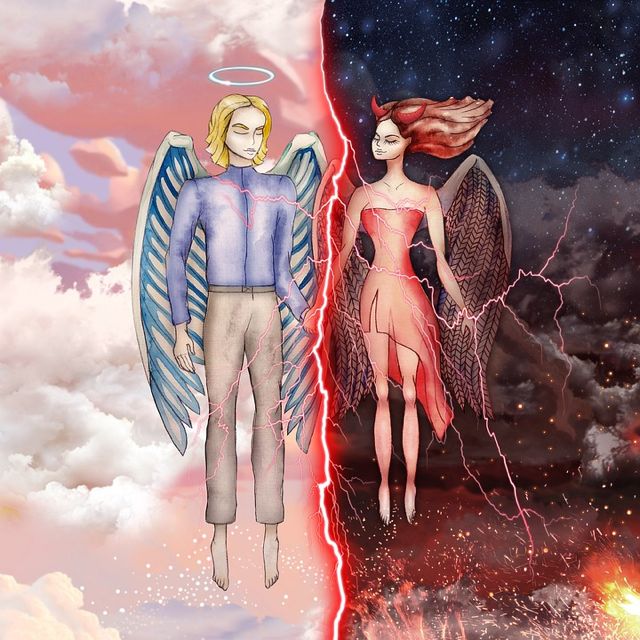
Justice is not a perfect personal redemption arc that is available to every person or situation. Sometimes we are left with the understanding that our actions, regardless of delusions, situations, or mental state, create suffering that must be borne by someone. With that as our central foundation, we can make good, life-affirming decisions without needing the fear of “hell.” It is possible to choose the light without feeling the fire.
Photo: Pixabay
Editor: Dana Gornall
Did you like this post? You may also like:
Comments