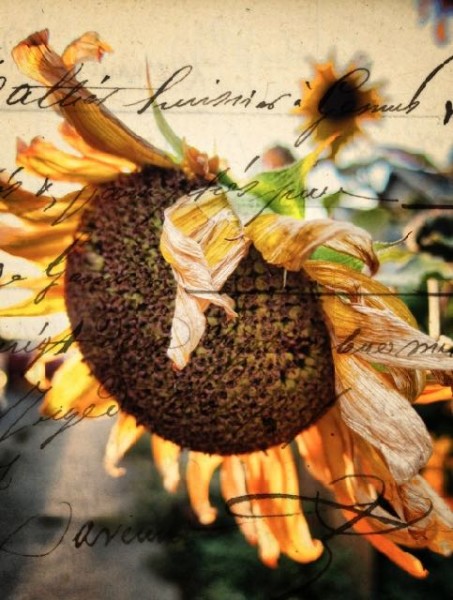
If interfaith dialogue has a future, it must be prophetic. We are living through a time of unprecedented crisis—politically, socially, ecologically. The very foundations of our institutions are crumbling. But the world is not without hope. In our sacred texts, in our relationships with one another, there is still a flicker of light. But it is up to us to tend that flame.
By George Cassidy Payne
“I am searching for faith, for the force of life…”
—Leo Tolstoy, Confession
Several summers ago, I spent three days inside an air-conditioned building while the world outside burned.
Wildfires ravaged the earth, glaciers wept into the oceans, and climate change became the backdrop of our daily lives. Wars continued to rage, feeding on the innocence of the vulnerable. Meanwhile, in the quiet conference halls of upstate New York, a community of Muslims, Jews, Christians, and others came together to talk about something much older than the crises of our time: sacred texts.
The Sacred Texts and Human Contexts symposium, hosted by the Hickey Center for Interfaith Studies and Dialogue at Nazareth College, felt at once like a relic of the past and a cry for the future.
I arrived expecting intellectual discourse—papers on the historical significance of this or that ancient text, a few polite discussions over hummus, perhaps. Instead, I encountered something more urgent: a community willing to reckon with the sacred not as something frozen in time, but as something we must live with, right now, in the heat of our unraveling world.
This was not just an intellectual exercise. It was a profound act of survival. Because, after all, the house is on fire. And God is still in the room.
In the world of interfaith dialogue, we’ve grown accustomed to the language of coexistence.
It’s the language of tolerance and polite conversation—a polite handshake between representatives of different faiths. We talk about bridging differences, respecting diversity, and managing complexity. There’s an inherent assumption that diversity can be managed, that faiths can coexist like guests at a dinner table.
But what I saw at the Nazareth symposium was something deeper—a shift from “interfaith” to enterfaith. This is not just about coexisting; it’s about dwelling in one another’s stories, holding one another’s truths in our hands, even if we don’t agree. It’s about moving from respectful distance to radical presence, from a surface-level exchange of greetings to a deep, embodied conversation where we grapple not just with ideas, but with each other’s lived realities.
To enterfaith is to embrace the discomfort of sacred texts that don’t fit our own worldview. It’s to step into a space where our differences aren’t merely acknowledged but experienced in real time. This is the spiritual urgency we need to confront the chaos of our present moment.
It’s a commitment to wrestling with God or gods, with history, with the texts of our traditions—not to make them “fit” neatly into our lives, but to allow them to transform us.
At the symposium, sacred texts were not treated like museum pieces. They weren’t relics to be admired from a distance. Instead, they were placed at the very center of the questions that plague our world: climate collapse, forced migration, systemic violence.
As we read scripture—whether from the Torah, the Bible, or the Qur’an—it was as though the pages themselves were scorched by the world’s troubles, each verse demanding a response. No one could claim neutrality. Everyone was invited to become part of the text’s unfolding narrative.
The keynotes, panels, and group discussions were not academic exercises; they were calls to action. Dr. Katherine R. Henderson, then President of Auburn Seminary, delivered a compelling keynote that will stay with me for a long time. “Climate change is not a political issue,” she said. “It’s a spiritual emergency.” She made it clear that in a world where the earth itself is groaning, our sacred texts cannot simply remain abstract; they must speak to the crises of our time.
Dr. Henderson’s call to action was not a plea for theoretical change but for a transformation in how we live and think about our faith.
She challenged us to become “living scriptures”—embodied, vulnerable, willing to risk everything for justice. As she quoted the philosopher Cornel West and St. Teresa of Ávila, I understood the deeper implication: revelation never stopped. It just needs new scribes.
One of the more profound parts of the conference for me occurred during the car rides I took between the airport and the conference hall, shuttling speakers from various traditions.
(I volunteered my services in this capacity to the Hickey Center.) Those brief encounters in a car, seemingly mundane, became sacred moments in themselves.
A Coptic Christian scholar from Cairo told me about the uprisings in Egypt, describing how the political upheaval had shattered his country and yet had made faith more immediate, more urgent. “When people are dying,” he said, “when injustice reigns, does it matter what kind of theology you hold? Is scripture a book to be revered in the safety of your study, or is it a weapon to be wielded in the streets?”
A Sufi mystic from Morocco shared his perspective on faith as a journey, not a destination. “In the garden of faith,” he said softly, “it doesn’t matter what your roots are as long as you’re thirsty for truth.” His words felt like a breeze of possibility, breaking through my doubts about the usefulness of traditional religion in a world gone mad.
Later, a Jewish elder, who had marched alongside Dr. King during the Civil Rights Movement, recited Heschel’s words as we drove past empty factories and communities abandoned by capitalism. “In a free society, some are guilty, but all are responsible,” he quoted. He spoke not as a scholar or as an activist, but as a witness to history, reminding me that faith cannot be separated from action.
These car rides became sacred text. In them, I realized that theology cannot remain abstract or academic. It must be lived, breathed, and shared. The text doesn’t live on a shelf—it rides in the backseat, asking us if we’re paying attention.
Back in my classroom, these lessons have remained with me.
I have often taught philosophy and ethics at a community college, where my students come from diverse backgrounds—Muslim, Christian, atheist, spiritual-but-not-religious. They are recovering from addiction, healing from trauma, and trying to make sense of a broken world. Many are the first in their families to attend college. Some will drop out. Some will struggle to find stable work. Some will change the world.
When I stand in front of them, I see their sacred texts. I see their pain, their confusion, their yearning. I see their questions—and I see my own. What I realized at the symposium is that my role as a teacher is not to impose my worldview or provide them with “answers.” My role is to listen to them, to read them as sacred texts in their own right.
As we explore the works of ancient philosophers and ethical theorists, we are not just reading old books. We are engaging in a dynamic, living conversation. Their stories—full of struggle, loss, and hope—are just as sacred as the texts we study. I, too, am a student in the classroom. We are all learning how to live in this broken, beautiful world together.
If interfaith dialogue has a future, it must be prophetic. We are living through a time of unprecedented crisis—politically, socially, ecologically. The very foundations of our institutions are crumbling. But the world is not without hope. In our sacred texts, in our relationships with one another, there is still a flicker of light. But it is up to us to tend that flame.
The prophets of old were not concerned with theology for theology’s sake. They were concerned with justice, with truth, with the cries of the oppressed. In our time, we are called to be prophetic voices—not in isolation, but in solidarity with those who are suffering.
The task before us is not to preserve the status quo or to retreat into comfortable theological debates. It is to challenge the systems of power that perpetuate inequality, violence and environmental destruction. It is to build a world where sacred texts are not merely read, but lived.
We cannot afford to stand by as the world burns. Sacred texts, when read rightly, will always urge us to act—to become prophets of justice in the world’s darkest corners. Our faith must not be a retreat but a confrontation, a confrontation with the pain of the world and our collective responsibility to heal it.
George Cassidy Payne is a writer, mental health advocate, and crisis counselor with over 20 years of experience in social work. He holds multiple degrees in philosophy and has taught courses on ethics and critical thinking. George’s work focuses on resilience, personal growth, and the transformative power of gratitude. He is passionate about using personal experiences to inspire others to embrace a mindset of appreciation and mindfulness, especially in challenging moments. George currently works as a 988 Crisis Text/Chat counselor and is involved in several community initiatives in Rochester, NY.

Photo: Pixabay
Editor: Dana Gornall
Did you like this post? You may also like:
Join the dialogue! Submit a piece here! Please check out our submission guidelines here.
Comments

George’s essays have appeared in publications such as The Good Men Project, The Buffalo News, The Rochester Democrat & Chronicle, and many more. A poet at heart, his work often blends memoir, philosophy, and theological reflection, rooted in the belief that language can be both a balm and a spark.
Whether reflecting on the writings of Marcus Aurelius, the parables of Jesus, or the mindfulness of a Jain monk sweeping the ground before them, George writes to make space for wonder, doubt, and dialogue.
He joins The Tattooed Buddha as a regular columnist to explore themes of death, inner peace, activism, grief, and contemplative life in a world on fire—and to ask, again and again: How can we live as if everything we do matters?
- Who Are You Beyond Your Labels? - August 19, 2026
- From Space Earth Looks Almost Unchanged, From Within Every Moment is an Opportunity - July 20, 2026
- Trauma and Remembering How to Heal - July 9, 2026