Their survival was not simply an act of luck, nor a raw test of physical endurance. It was the quiet triumph of a set of mental, emotional and spiritual skills cultivated across generations.
By George Cassidy Payne
Seven years ago, the world stopped what it was doing.
In the summer of 2018, 12 boys and their soccer coach were trapped deep inside a flooded cave system in northern Thailand—a nightmare scenario that stretched on for weeks. News outlets blasted updates across the globe. Divers, soldiers, engineers, and volunteers from around the world mobilized. For once, attention spans held steady.
And miraculously, against all odds, they were rescued.
But the Thailand cave rescue was more than just another sensational headline, more than a blip in the endless churn of the news cycle. It remains one of the great contemporary stories of human ingenuity, endurance, and collective hope. It is also a spiritual story—one that still has the power to challenge and inspire us, long after the spotlight has moved on.
As I reflect on the outpouring of resilience that fueled that rescue, I’m struck by what the boys and their coach did not have.
In an age drowning in comfort and convenience, what’s most revealing is what they went without.
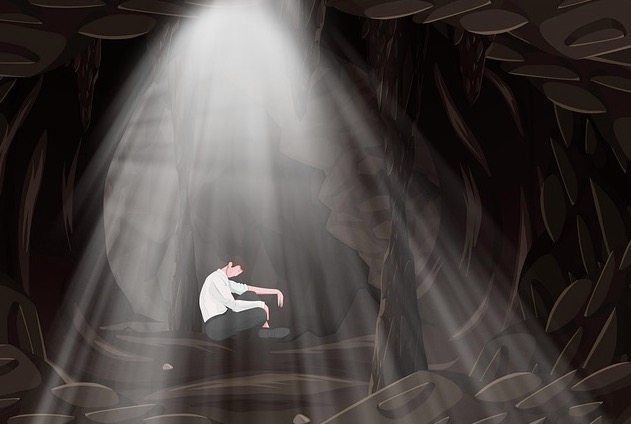
They had little to no perceptible light.
They were without cooked meals, fast food, or any food at all for days.
They had no iPhones, no TikTok, no breaking news updates, no endless scroll of distraction.
They had no warm beds, clean sheets, showers, plumbing, or toilets.
They had no movies, video games, playlists, or toys to pass the time.
They had none of the tools we typically use to escape ourselves.
It was the Buddha who taught:
“To live a pure unselfish life, one must count nothing as one’s own in the midst of abundance.”
Yet the boys were not living in abundance. They were suspended in scarcity — in a literal darkness that forced them inward, toward resources not visible.
What they did have was remarkable:
They had mineral water dripping from cave walls.
They had each other’s presence, encouragement, and warmth.
They had hope and faith, stubborn as the roots of old trees.
They had the focused attention and prayers of millions worldwide.
They had friends and family lighting candles in temples and churches, willing them home.
They had experts and rescuers pushing their own limits of strength, creativity, and courage.
They had the timeless, innate human ability to adapt, cope, and find stillness within.
And crucially, they had religion, not as dogma, but as a lived practice of mind and spirit.
Regarding this last possession, the Western mind should be careful not to misunderstand. Most of the boys, their coach, and even many rescuers were not shaped primarily by Christianity, but by Buddhism. Thailand is approximately 93.6% Buddhist, predominantly practicing Theravada Buddhism—a tradition emphasizing mindfulness, compassion, patience, and the direct observation of suffering.
Their survival was not simply an act of luck, nor a raw test of physical endurance. It was the quiet triumph of a set of mental, emotional and spiritual skills cultivated across generations.
When panic might have overtaken them, they breathed.
When despair beckoned, they meditated.
When fear surged, they turned inward for calm, because no external rescue was immediately available.
As Thich Nhat Hanh taught:
“Feelings come and go like clouds in a windy sky. Conscious breathing is my anchor.”
Imagine these young boys, some barely teenagers, anchored only by their breath. Anchored by the living memory of monks, teachers, parents, and traditions that taught them not to fear fear itself.
Their survival was communal, not individualistic. Their coach, who had previously spent time as a monk, reportedly encouraged them to conserve energy, to meditate together, to trust the moment. In Buddhist understanding, there are no saviors who come from above to pluck us out of suffering. There are only fellow travelers, walking the same path side by side.
As Pema Chödrön reminds us:
“Compassion is not a relationship between the healer and the wounded. It’s a relationship between equals.”
Rescuers, boys, parents, experts—all were equal in vulnerability, in hope, in perseverance. No one floated above the suffering. All were rooted in it, yet chose to act with extraordinary kindness and courage nonetheless.
Their story continues to matter because it disrupts the myths we live by today—that survival comes from tech, wealth, or status. That without distraction, we are nothing. That only material solutions can save us.
Their story points in a different direction, one far older and more enduring: That resilience is a quiet, internal skill, not a dramatic external event. That conscious breathing can anchor the soul even when the world collapses around us. That true abundance is not what we accumulate, but the inner resources we cultivate.
The Buddha’s words echo through the darkness of that cave and into our lives now:
“No one saves us but ourselves. No one can and no one may. We ourselves must walk the path.”
The boys and their coach walked that path, not in ideal circumstances, but in absolute deprivation. Not with perfect peace, but with the courageous imperfection of human beings refusing to give up.
Seven years later, their story is still here, quietly offering its radical wisdom to anyone willing to listen.
You already have everything you need.
You always did.
You always will.
Photo: Pixabay
Editor: Dana Gornall
George Cassidy Payne is a writer, crisis counselor, and board member of Agape Haven of Abundance, a nonprofit dedicated to cultural and educational enrichment for young women of color. With a background in philosophy and social work, he is passionate about integrating mindfulness and compassion into both personal and professional life. George is also an advocate for suicide prevention and mental health awareness.

Did you like this post? You may also like:
Comments

George’s essays have appeared in publications such as The Good Men Project, The Buffalo News, The Rochester Democrat & Chronicle, and many more. A poet at heart, his work often blends memoir, philosophy, and theological reflection, rooted in the belief that language can be both a balm and a spark.
Whether reflecting on the writings of Marcus Aurelius, the parables of Jesus, or the mindfulness of a Jain monk sweeping the ground before them, George writes to make space for wonder, doubt, and dialogue.
He joins The Tattooed Buddha as a regular columnist to explore themes of death, inner peace, activism, grief, and contemplative life in a world on fire—and to ask, again and again: How can we live as if everything we do matters?
- Who Are You Beyond Your Labels? - August 19, 2026
- From Space Earth Looks Almost Unchanged, From Within Every Moment is an Opportunity - July 20, 2026
- Trauma and Remembering How to Heal - July 9, 2026