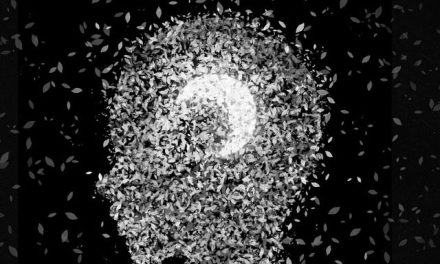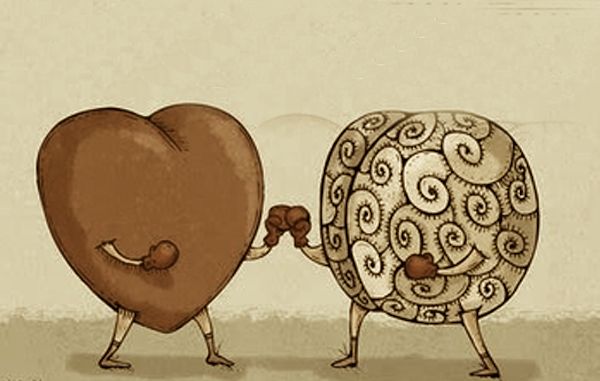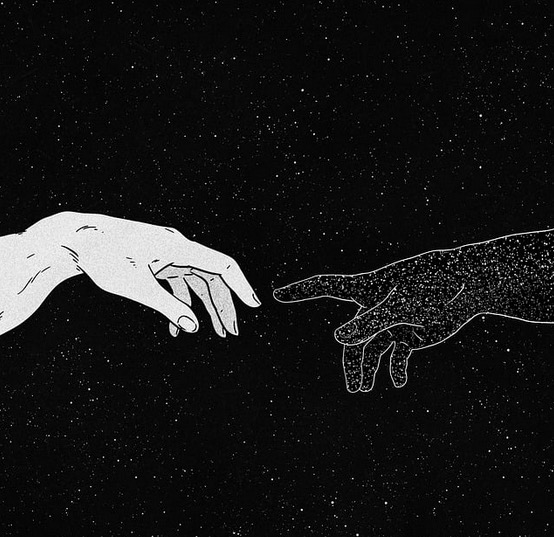
We can’t evict God and the soul and cling to the self as a consolation prize. Whatever independent, permanent self you find is going to be just as non-existent as the soul and for exactly the same reasons: nothing is permanent or independent
By Johnathon Lee
Science opened the door to atheism, and atheism to egoism. That’s where we are.
Theists believe that the immortal soul is the “authentic self.” It’s independent, unchanging and crafted by God. Naturalisitc atheists don’t believe in that, but many still believe in an authentic self.
This self was created by nature instead of God, and it vanishes when we die, but it’s still stable and independent while we’re alive. To a believer, the soul is covered by sins that need to be forgiven. To an egoist, the self is covered by society and needs to be freed.
This paves the way for toxic ideas like, “I am what I am,” “I’m just being true to myself,” “I’m trying to find myself,” and, “I’m self-aware.” We’ve basically turned ourselves into gods and our lives into crusades. Our beliefs become doctrine, and anyone who disagrees is persecuting us.
This is an apolitical issue; it’s a human issue that can seep into anything. It’s also made a lucrative self-help market. When I asked ChatGPT to write me a generic self-help essay, it gave me:
“The first step is simple—believe in yourself. Life is what you make of it. You have unlimited potential. You were born for greatness. It’s time to rise, to show up, and to become the person you were always meant to be. The best version of yourself is already within you—now go bring it to life.”
“The best version of yourself is already within you.” That’s the authenticity movement in a nutshell. It’s a soul without a god. Since there’s no god, there’s nothing greater than the self. You weren’t born to worship or be virtuous. “You were born for greatness.” You’re goal isn’t heaven—it’s to, “Become the person you were always meant to be.”
Without a designer deity, what determined the person you’re meant to be? Nature?
Nature doesn’t care about the true self. Nature is a bunch of pushing and pulling spirals and circles (samsara) that programmed us to survive just to survive. The self—whether it’s nurtured by culture or naturalized by genes—is nothing but an ever-changing system that’s inseparable from nature.
A truly authentic self would be one that accepts down to its marrow and changes with the changes. We can’t evict God and the soul and cling to the self as a consolation prize. Whatever independent, permanent self you find is going to be just as non-existent as the soul and for exactly the same reasons: nothing is permanent or independent.
I wouldn’t be so passionate about the whole thing if authenticity wasn’t destroying the world and people weren’t profiting from its destruction.
The West is being crushed by its own egoism, with millions of people fighting for true selves that don’t exist. Things would get better if we grew up and realized that the self is fluid and open, that no one does anything without the support of millions of others making it possible.
If you’re looking for Buddha, it’s just this very absence of fixity in Being. It’s the knowledge that nature is change and interdependence, and that there’s nothing beyond nature. Finding yourself or being yourself will not heal you. It just covers up the wound that was made by craving something fixed in a fluid world.
It isn’t our fault that we want something concrete to build our lives and identities on. It’s part of our needs for security—belongingness and esteem. Human-nature—a complex of contradictions—stems from the fact that our blood burns for independence even as our hearts beat to nature’s rhythms. We want to be ourselves, but we also need to breathe, and the breath challenges our notion of independence. That we become the particles we inhale overturns all ideas of fixity.
So, toss the whole project.
Breathe and watch as everything you are (including the act of watching) comes and goes un-willed. Stop and see how each experience is a relationship bridging the imaginary gap between yourself and everything else, as well as the gap between past, present and future.
There aren’t any gaps at all.
Photo: Pixabay
Editor: Dana Gornall
Did you like this post? You may also like:
Comments

- Buddhist Struggle: Love, Happiness & Nihilism - June 2, 2026
- How the Walk for Peace Brought Me Back to Buddhism - February 11, 2026
- The Path of Emptiness - December 12, 2025