So, let’s get this straight—it is the fault of Olympic organizers because they did not foresee that a group of people would completely misunderstand their arty Greek homage and mix it up with an Italian painting which is neither scripture, nor a sacred relic, and call it “blasphemy.”
By Kellie Schorr
Here in the USA, it seems like there is an open wound just waiting around every corner.
During an overly hot summer where divisive politics, toxic racism, ageism and sexism, climate crisis, food recalls, and bad driving dominate every media outlet and private conversation, what could be better than a collection of the world’s best athletes on a diverse, glorious stage reminding us it is indeed a small and amazing world, after all?
The City of Lights has never been more aglow with promise and pride. The athletes on their boats, the flags of so many nations, a musical score spanning taste and generation, the Eiffel Tower dressed in rings, Lady Gaga and her fathers, Snoop Dogg and the torch, Celine Dion, and the largest, most brilliant floating cauldron ever—it was perfection.
Until it wasn’t.
This long summer of discontent just couldn’t let us have nice things. Instead, it brought us a controversy so mind-blowingly unnecessary it will be remembered more for its ridiculousness than any kind of righteous heroism or constructive dialogue.
“The Paris Olympics Blasphemed the Last Supper and Offended Christians,” the headline read. Before I could even pull up a memory of the opening, I was seeing the avalanche of outrage online.
“Post this picture of the Last Supper to show how Paris Disgusted You.”
“Olympics have gone WOKE!” (lol, as if Ancient Greece was ever about heteronormative behavior).
“Paris Mocks our Lord and Savior!”
By midday Eastern Standard Time, organizers of one of the most beautiful opening ceremonies imaginable were scrambling to put out statements. Imagine the trauma of having to explain the tableau was a reference to Dionysus (or Bacchus) and Greek pagan festivals without seeming condescending or straight up telling your audience they are ill-educated and being melodramatic.
Once it was made clear that neither the Last Supper painting nor the Biblical Last Supper had anything to do with their opening that should have snuffed out the hellfire and we could get back to enjoying the games, right? Oh, nooooo. The offended parties, most of whom are evangelical Protestants or conservative Catholics, doubled down on their outrage claiming, “Well they should have KNOWN it would be offensive to Christians because it so closely resembled the Last Supper painting.”
So, let’s get this straight—it is the fault of Olympic organizers because they did not foresee that a group of people would completely misunderstand their arty Greek homage and mix it up with an Italian painting which is neither scripture, nor a sacred relic, and call it “blasphemy.”
And the Buddha said, “This is why we have suffering.”
Well, okay—I’m saying that. The Buddha said in the first his Four Noble Truths, “All life experiences suffering.” I’m pretty sure protest over an insult that didn’t really even happen is part of that suffering.
“I’m Mad as Hell and I… (Don’t Know Why)”
The old news slogan of past decades—“If it bleeds, it leads,” has been replaced in the internet age with, “If it shouts, it gets out.” Or, for those who profit off of our collective madness, maybe it’s, “If there’s rage, it pays.”
Outrage, and the sense of personal oppression that is its seed, have long been catalysts for change in the history of humanity. Nowhere is that truer than the ongoing story of Christianity. In fact, you can’t even spell “protestant” without “protest.”
From the day Martin Luther published Disputation on the Power and Efficacy of Indulgences (in our age, we’d just call it “95 Reasons Why”) and a wave of protests resulted in a breakaway movement we now call the Protestant Church, Catholics and Protestants have historically found protest to be the biggest building block they’ve got. Pretty much every major area of renewal and power has resulted from a sense of oppression and protest.
Paradoxically, what’s bad for the church is—good for the church.
In the US, the past few decades have not been great for conservative churches. Attendance is down, donations are dropping, and many are turned off by congregations with seemingly homophobic, anti-trans, sexist or shame/fear-based messages. In 2023 a Gallup poll showed the percentage of people identifying as “not religious” has doubled since 1999 and people identifying as “religious” dropped 7%. Among those “religious” numbers, people who said they went to church consistently dropped by 12%,
It’s time to fire up the church, and nothing does that as well as making people feel like David standing up to Goliath. However, American Christians are able to worship freely, share their theology loudly, and even get celebrities and politicians to broadcast their ideas and legally codify their causes.
How do you gain power from oppression in a country where you simply aren’t being oppressed? You sweat the small stuff.
Beer ads featuring trans people.
Barbie movies where men aren’t the focus.
Amusement parks that let everyone—even LGBTQ people—enjoy a day.
Taylor Swift at a football game.
Education that dares to teach science and (*cough*) art history.
Olympic tableaus that might look like a painting that hung in your church or your grandma’s house.
Everything—ANYTHING—can be the cause of a meltdown. Even when no one can tell you where or what actually hurts.
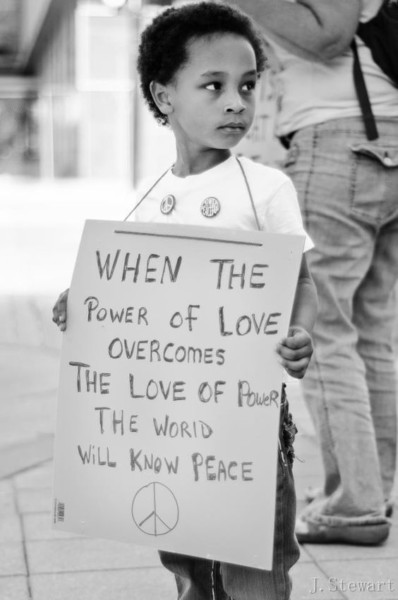
The Power of Protest
Protest, in itself, is non-dual. It is the object of the protest and the objective you have that will determine whether you are changing the world or throwing a hissy fit in the comments section.
If the object is something actually harmful—war, countries without food or clean water, injustice, prejudice, abuse – and the objective is to stop, heal, or counteract that harm—protest can be amazingly effective. Think:
- The 1913 Women’s Suffrage Parade
- The Lunch Counter Sit-ins of the 1960’s.
- The Stonewall Riots of 1969
- The Anti-Apartheid Movement of the 1980’s.
- The #MeToo Movement in 2017
- The George Floyd Protests by Black Lives Matter in 2020
Those moments in history helped create pivotal change that matters. You know what protests have been ineffective?
- The 1911 National Association Opposed to Woman Suffrage (NAOWS) lecture series.
- Governor George Wallace’s Stand in the Schoolhouse Door in 1963
- The protests of Westboro Baptist Church against LGBTQ rights.
- The Unite the Right Rally
- The January 6th Capital Attack
What’s the difference? Effective protests address the suffering of others. They are based on compassion, which is the wish that others do not suffer. Ineffective protests address the promotion of the self. They are based on transaction which is the act of getting something (money, power, people) without regard to others.
Before you post your memes or sit up all night making those signs, it is good form to have a moment of silence and ask yourself, “Am I protesting to keep someone from harm or am I just offended because it isn’t the way I want it.”
Not All Christians
For a religion in which having idols is one of the top 10 “thou shalt nots,” The Last Supper by Leonardo Da Vinci is a stunningly odd idol to rally around. A High Renaissance painting by an artist who was many private things but not exactly a “family man,” it portrays a historically inaccurate Christ and collection of romantically idealized and, according to art historians, feminized men, in keeping with Da Vinci’s love for blurring gender lines. Let’s face it—drag queens were right in this painting’s wheelhouse.
Yet, its status as one of the most printed and seen representations of a biblical event makes it easy for people to recognize and understand. Perhaps it’s that ease which caused so much confusion.
It’s important to note that the vast majority of Christian people were not caught up in transactional politics and idol protection. In fact, what I saw from many writers, thinkers, pastors and prayer partners was people taking the opportunity to point out that even if the tableau was an allusion to the last supper, it would serve as a rightful one.
Progressive and mainstream Christians were forward about their assertion that they worship a God who loves and welcomes everyone. They eschewed the vocal offense for exactly what it was—a way to gain attention for sad reasons in a less-than-helpful way. They affirmed through their life and words a belief in the power of inclusion, forgiveness, and grace.
That’s the final thing we need to learn about protest. Volume means nothing. Compared to the loud, chaotic memes and voices of offense, with full media coverage (“If it’s rage, it pays”) the other Christian response—the one of art history, communion theology, and open arms—was quiet, thoughtful and often only seen after plowing through the bullhorn of “Liquor, Supper, and Drag Queens, Oh My!”
We sometimes assume the louder the protest the more people are on board. However, it’s best not to equate the virulence of the crowd with the validity of the thought.
Several days into the 2024 Games, the protest has murmured down to a handful of people desperate to get in front a microphone. The things we’ll remember are the achievements of Simone Biles, Katie Ledecky, the Women’s Rugby Team, Clark Kent Pommel Horse Guy (Stephen Neodoroscik) and how many times Snoop Dogg made us smile. As for the outcry over “the slight that never was”—may we learn to use our voices effectively to reduce real suffering in the world.
There really is an open wound on every corner. Let’s start by healing them.
Photo: Picryl
Editor: Dana Gornall
Did you feel inspired by this? You may also like:
Is the Bible Misogynistic? A Look at Views on Women in Christianity
Comments