For me, plans are easier to let go of than people or pets. Like having a plan to make pesto for dinner and discovering that the farm stand is out of basil. Disappointing, yes, but not a big deal. Especially after I spot fresh kale and remember that I have a recipe for kale pesto.
By Rosanne Annoni
When I slipped on black ice last year and fractured my sacrum, I had to give up a writing retreat in Dingle, Ireland.
While lying on my back, staring at the ceiling and feeling slightly sorry for myself, I practiced letting go of Ireland and making the most of my time at home. The memoir I’d been writing for years had just been accepted by a publisher. I needed to work with a developmental editor and restructure the first three chapters. Now, instead of creating new pieces in writing workshops, I had the time to work on revisions. Lemonade from lemons, but not what I had planned.
Impermanence, a fundamental concept in Buddhism, means that all things in life, be they physical or immaterial, are ephemeral. Nothing lasts forever, not a thought, not a feeling, not a body, not a house, not war, not weather. And not my plans for a writing retreat. To understand this concept, all we need do is watch the sun rise and set or observe green leaves sprouting on trees in the spring, then falling and blanketing the earth with oranges and yellows in autumn. Rain turns to snow, dear friends move away or die, our own bodies develop when we are young and deteriorate as we age. Nothing in the observable world stays the same.
The lesson of impermanence is to hold reality lightly, to not get attached to people, places, and things, or to emotional or spiritual states. Bliss comes and goes, money comes and goes, people we love come and go. Nothing to cling to, simply experiences to experience with no expectations of what the future holds.
Seems like a benign lesson, holding things lightly, not clinging to anything. But it wasn’t foreground in my consciousness when, two weeks ago, I dropped off my 13 year old Havanese dog at the animal hospital for surgery to repair a torn ligament and meniscus. I couldn’t stop my mind from imagining something going wrong and getting a call that Zoey hadn’t survived the procedure. Deep breaths, reminding myself that she’d be fine and was in good hands, helped. But the truth is that I was praying for a successful surgery and that I could bring her home the next day. I wasn’t ready to let her go.
The absolute truth of impermanence stands side by side with the relative truth of pain and heartbreak.
If Zoey had died during surgery, I would have grieved deeply, which isn’t at odds with impermanence. When we accept the transient nature of reality, we know grief, too, will pass and ultimately, we make peace with what is, knowing it, too, will change. Nothing to cling too and yet, our hearts weep each time we lose what we love.
Making plans is a good way to test the principle of impermanence. We need to schedule doctor’s appointments, work commitments, family visits, and children’s school events like spring breaks or afterschool activities. And if we hope to enjoy a vacation, it’s wise to make travel plans and hotel reservations.
Plans are fine, provided we don’t relate to them as a certainty.
For me, plans are easier to let go of than people or pets. Like having a plan to make pesto for dinner and discovering that the farm stand is out of basil. Disappointing, yes, but not a big deal. Especially after I spot fresh kale and remember that I have a recipe for kale pesto. When I can shift gears without much fanfare, I experience ease and feel gratitude for what is right in front of me: the means to buy healthy food, a home to cook it in, and the gift of living another day. When we accept the truth of impermanence, what often happens is that we become more present to each moment as it unfolds and gratitude fills our consciousness.
In time, my sacrum healed, the upside of impermanence, and life continued, but at a slower pace.
I completed my memoir revisions, my publisher set a release date and Revisions were made to my manuscript, a publishing date was decided, summer brought visitors and warmth and beach walks. Then came autumn, cooler temperatures, and life seemed on course again. We took a risk and made some plans, booking travel to Punta Cana for six nights in late February, followed by 10 days in Northern California for a meditation retreat. We eagerly anticipated a break from the gray, cold winters on the Cape.
Instead of our usual winter—one or two snowstorms in late January if at all—mid-December brought one snowstorm after another. I walked gingerly on icy roads, wearing cleats on my shoes to prevent another slip like the year before. We bought an electric snowblower after my husband had to shovel our long driveway four times in 24 hours. Our neighbors, who have lived on the Cape for years, teased us. “Thanks for the guarantee that we won’t be seeing any more snow this season.”
Ha! Three snowstorms later, we left for Punta Cana.
The first day while walking on the beach, I stubbed my toe on a rock in the sand. I hobbled around with an improvised splint, thanks to a paramedic, and was limited to walking up to my ankles in the warm turquoise Caribbean waters rather than riding the waves with my husband. Internally, I rode the waves of disappointment. Not again! I fretted that this might be the last straw for my husband. He’d nursed me through two hip replacements and the fractured sacrum over the past 16 months.
“Might this be when you leave me?” I asked. I didn’t really think he would leave, but tears were streaming down my face and my fear was real. He was slow to answer, because he’s often slow to answer when he contemplates things. But he was paying attention to me.
“Was the pause too long?” he asked, with a slight smile.
“Yes!”
He wrapped his arms around me and promised he wasn’t going anywhere, which was a great comfort even though it was a promise he couldn’t guarenteguarantee. Not that he had any intension of leaving me, but what if he was in a fatal accident or had a heart attack later that day? If we truly understand impermanence, it means accepting that we have no control over what happens next. We can make plans and cherish our relationships while simultaneously knowing that nothing is permanent.
Living my life without my husband or dog is far more challenging than letting go of basil pesto! And yet, knowing that I can’t count on what I love to be there in the next moment—I could die, or they could die—can serve as an incentive to fully cherish each precious moment of our lives.
The gift of presence happens when we slow down, take deep breaths, and take in the beauty all around us even when our bodies are in pain or our plans are disrupted or our hearts are breaking with grief.
The day before we were scheduled to depart Punta Cana, we got word of an epic storm that was predicted to dump a few feet of snow in Boston and on the Cape, with winds up to 60 miles per hour. We spent the morning on the phone with Delta trying to rebook our flight for Tuesday instead of Monday and were fortunate to snag the last two seats on a flight going through Atlanta. It meant a long day of travel and, if we were lucky, a return to our home in the wee hours of Wednesday morning.
Given my toe, the delay returning, and the fact that power was out on most of the Cape, we realized that we wouldn’t be able to pull off an early morning flight to California on Thursday. We spent the rest of the day cancelling plans for California. Once home, we busied ourselves doing laundry, buying groceries from mostly empty shelves, getting my toe X-rayed, shoveling snow, and looking out on so much of it that I wondered if, magically, our home had been moved to Alaska.
The truth of impermanence is at once a benign and powerful lesson.
We can resist change and live in terror of loss and death. Or we can keep our hearts open, leaning into the unfoldment of reality, knowing that the only certainty in life is this present moment. Nothing stays the same, ever. To the best of my ability, I embrace life. After all, it’s the only one I have.
Rosanne Annoni was a successful psychotherapist in private practice for 35 years before becoming an ordained teacher of the Diamond Approach in 2000. She has worked with individual, couples, and groups in the United States, the UK, and Europe sharing both psychological and spiritual teachings. She began writing 15 years ago and in 2024, she was awarded an Emerging Writer Fellowship from Aspen Words. Her memoir, Unfolding the Heart: One Woman’s Quest for True Nature, is scheduled for publication in September 2026. She is married, has one adult son, and lives with her husband and dog on Cape Cod.
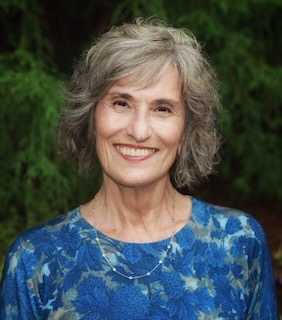
Photo: Pixabay
Did you like this post? You may also like:
No Need to Run: What Slasher Film Killers Teach Us About Impermanence
I’d Rather Not Try the Green Chili: A Story of Impermanence & Embracing Uncomfortable
Comments

- Loving-Kindness for the Weeks That Are Too Much - October 6, 2026
- The Finger on the Glass - September 30, 2026
- Fishes’ Eyes Swim with Tears - September 12, 2026