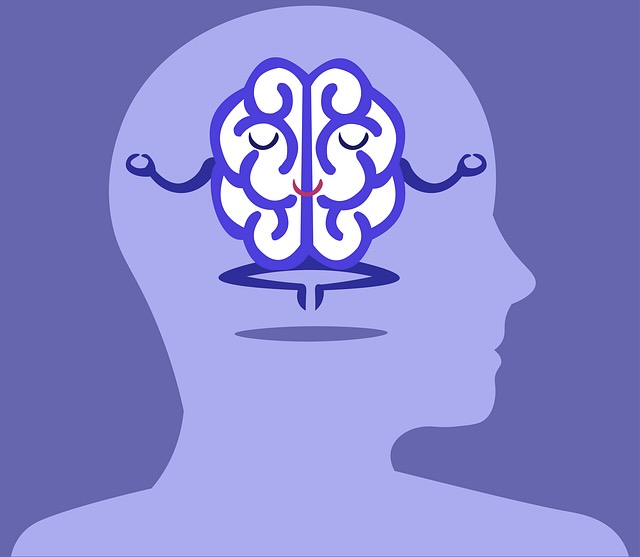
At its most simple, it is the mind of the beginner instead of the mind that is full of knowledge about something. The mind where Shunryu Suzuki famously said, “there are many possibilities” instead of the expert’s mind where “few” possibilities exist. How often do we think we know everything about something which, in turn, cuts us off completely about ever knowing more about that something?
By Gerry Hōshō Rickard
Dizang’s Not Knowing
Dizang asked Fayan, “Where are you going?”
Fayan answered, “Around on pilgrimage.”
Dizang then asked, “What is the purpose of pilgrimage?”
Fayan replied, “I don’t know.”
Dizang said, “Not knowing is most intimate.”
Fayan was enlightened when he heard this.
The above koan is Case 20 in the Book of Serenity, written by two Chinese Chan masters in the 13th century.
Hongzhi Zhengjue wrote the 100 koans contained in the book, while Wangson Xingxiu provided the commentary. As a Zen practitioner, the mind of not-knowing is never far away. It is mentioned during dharma talks, in books, in various suttas. It is described as the key to living the precepts.
At its most simple, it is the mind of the beginner instead of the mind that is full of knowledge about something. The mind where Shunryu Suzuki famously said, “there are many possibilities” instead of the expert’s mind where “few” possibilities exist. How often do we think we know everything about something which, in turn, cuts us off completely about ever knowing more about that something?
It is the mind that exists before opinions, judgments and views get in the way. The mind before thinking arises and pulls us away from what is actually here in front of us. Beyond labels, beyond identity. Beyond any concepts whatsoever.
The question is, can we live from this not-knowing mind? Is it really possible?
We can, perhaps, live it by allowing life to unfold naturally, without imposing our small sense of self on it with our preconceptions, views and opinions about how things “should” be. It’s like letting go into the flow of our lives as they unfold just like a river—the river doesn’t know what lies around the next bend and doesn’t need to know.
Here, in its not knowing, lies its freedom.
If we allow our response to a situation arise from what Suzuki termed big mind (as distinct from the small mind of everyday relative thinking), then we allow our lives to spontaneously and naturally unfold. A river finds its own way around the obstacles that is thrown at it. It doesn’t resist them, hold onto them or fight its way around them. It just finds the appropriate way around each of them, without struggle, without resistance.
Zen also talks of an “appropriate” response, a phrase originally attributed to Chan Master, Yunmen (Ummon in Japanese), that naturally comes from this mind of not knowing. It is a response that comes from a place of deep compassion and non-thinking about the situation that we are facing. Here there is just a responding from a place where there is no separation between the non-existent “me” and the non-existent“ other.”
We are the same, we are not two, therefore there is no personal agenda involved. From here we take spontaneous and selfless action based on what benefits the other person instead of what benefits ourselves. This is responding naturally without the burden of identity or “me”-ness. This is the appropriate response, before “knowing” is involved.
Ram Dass beautifully put it this way:
When I forget who I am, I serve you.
Through serving, I remember who I am
And know I am you.
We do the appropriate thing by not knowing what is appropriate. Even the word “appropriate” is also an inappropriate one to use, since it is also a concept. So we just respond from this place of awareness, our universal, unconditioned, natural mind, and that is good enough. This is not-knowing at its most intimate.
Roshi Bernie Glassman described this intimacy of not knowing saying: “When we no longer know how we’re going to act, therein lies our true freedom.” Rumi put it this way: “knowledge of the world is a kind of ignorance.” While the 14th Century Christian mystic text, The Cloud of Unknowing stated that “we can’t think our way to God.”
Not knowing isn’t a blank slate of knowing nothing.
It is living and vibrant, because it’s the vibrancy of true unattached presence and all that is contained in this moment. It is being fully alive and fully present in the moment that contains all our experience. Our practice is to find this place—to reach this point that needs no words or no knowledge, the mind that Zen Master Seung Sahn called the “don’t know” mind, our true nature.
I remember when I led my first retreat in 2023. It was in Portugal, and I was co-hosting with a yoga teacher and friend, Becca, under the theme “Moving Mindfully Through the Elements.” Just before the retreat I had a conversation with my teacher, Andō, where I expressed that I was still a little uncertain if I was prepared enough.
In answer she quoted the Tibetan Master Tilopa from The Song of Mahamudra.
“Become like a hollow bamboo so that everything flows through.”
There it was. The emptying of oneself of all of our preconceived ideas to let the dharma flow from the mind of not knowing – or at least the little dharma that I had realized at that time. And it worked—with a little preparation, of course. Becoming the hollow bamboo opens us up to Suzuki’s many possibilities
If we name it, we cut ourselves off from what it actually is. Hold up a random object in front of you and ask yourself the following: What is it before I have any knowledge of it here in my unthinking mind? Here lies intimacy, and from here, a myriad possibilities, expressions and responses exist.
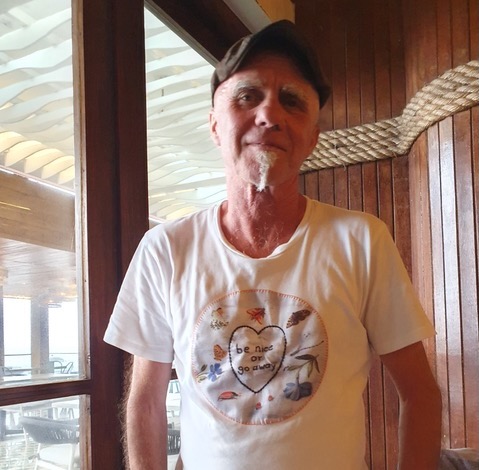 Gerry Hōshō Rickard is an Irishman living in Mozambique. He has a master’s degree in teaching mindfulness from the University of Bangor in Wales, and now teaches, leads retreats and online sessions in Mozambique and beyond (www.mindwise.me). A practicing Zen Buddhist he received the precepts from Roshi Joan Halifax at the Upaya Zen Centre in Santa Fe. His articles are part of his way to attempt to live up to his dharma name, Hōshō, which means “voice of the dharma.”
Photo: Pixabay
Editor: Dana Gornall
Did you like this post? You may also like:
Comments

- Loving-Kindness for the Weeks That Are Too Much - October 6, 2026
- The Finger on the Glass - September 30, 2026
- Fishes’ Eyes Swim with Tears - September 12, 2026