A thought is not the self. A feeling is not the self. A trauma response is not the self. What happened to us is real. The effects of what happened are real. But neither defines the entirety of our being. Healing begins when we stop treating ourselves as broken and start understanding ourselves as wounded.
By George Cassidy Payne
**trigger warning** discussion of sexual assault
Long after a traumatic event has passed, the body may continue responding as if danger is still present.
A sudden sound. A certain smell. A familiar touch. A passing thought. What seems insignificant to others can awaken an entire landscape of fear, confusion, grief, or shame.
For survivors of sexual assault, trauma is rarely confined to the past. It often becomes woven into the nervous system itself. The experience may not return as a clear recollection. Instead, it emerges in fragments: restless sleep, anxiety that arrives without warning, emotional numbness, intrusive thoughts, chronic tension, or an inability to feel fully safe even in peaceful moments.
The Buddha taught that suffering leaves traces. Modern neuroscience suggests something similar. Experiences of overwhelming fear and violation can alter the way the brain and body respond to the world. The body learns survival. The tragedy is that it sometimes struggles to recognize when survival is no longer necessary.
Many survivors describe feeling disconnected from themselves. They may move through daily life while carrying an invisible burden. Some become hypervigilant, constantly scanning for danger. Others drift toward dissociation, feeling detached from their emotions, their relationships, or even their own bodies.
Neither response is a failure. Both are adaptations.
The nervous system is not trying to punish us. It is trying to protect us with the tools it learned during moments of overwhelming vulnerability. This becomes especially important when trauma intersects with sexuality. One of the least understood consequences of sexual trauma is post-traumatic sexual dysregulation. Some survivors find themselves avoiding intimacy altogether. Others experience compulsive sexual behaviors, intrusive sexual thoughts, or a relentless pull toward sexual stimulation despite the distress that follows.
These experiences are often accompanied by profound shame. The mind asks, Why am I doing this? The heart asks, What is wrong with me? Yet the deeper question may be different. What is my nervous system trying to accomplish?
From a trauma-informed perspective, many of these behaviors are less about desire and more about regulation. The body discovers temporary ways to escape emotional pain, numb overwhelming feelings, or discharge accumulated tension. What begins as a survival strategy can gradually become a repetitive cycle.
The cycle is often fueled by shame itself.
A person engages in a behavior, feels relief, then experiences guilt or self-condemnation. The shame creates more emotional distress, which increases the need for relief, and the cycle repeats. What appears on the surface as a moral struggle may actually be an unhealed trauma response seeking resolution.
This understanding does not excuse harmful behavior. It does, however, invite compassion. And compassion is often where healing begins. Many survivors are terrified by intrusive thoughts, including sexual thoughts that feel disturbing, unwanted, or completely inconsistent with their values. These thoughts can create enormous fear because people often assume that a thought reveals a hidden desire.
Trauma tells a different story. The traumatized mind frequently generates images and associations that feel foreign and unwanted. The distress these thoughts create is often evidence that they are not expressions of identity but symptoms of dysregulation.
The mind, like the body, can become tangled in survival patterns.
One of Buddhism’s most enduring insights is that we suffer when we mistake passing experiences for the essence of who we are.
A thought is not the self. A feeling is not the self. A trauma response is not the self. What happened to us is real. The effects of what happened are real. But neither defines the entirety of our being. Healing begins when we stop treating ourselves as broken and start understanding ourselves as wounded.
A survivor who believes they are defective often turns against themselves. A survivor who understands they are carrying an injury can begin offering themselves the same patience and care they would offer another suffering human being. Mindfulness practices can support this process. Not because meditation magically erases trauma, but because mindful awareness creates space between experience and identity. A racing heart becomes a sensation to observe rather than proof of danger. An intrusive thought becomes an event in consciousness rather than a verdict about character.
Grounding practices, movement, breath awareness, therapy, supportive relationships, and trauma-informed treatment all help create new pathways toward regulation. The goal is not to suppress symptoms but to help the nervous system discover that safety is possible again.
This takes time. The body heals at its own pace, yet healing remains possible. The nervous system can learn new patterns. The grip of shame can loosen. The cycle of survival can gradually give way to something deeper than mere endurance. It can give way to presence. For many trauma survivors, the path forward is not about becoming who they were before the trauma. It is about becoming someone who can carry the truth of what happened without being defined by it.
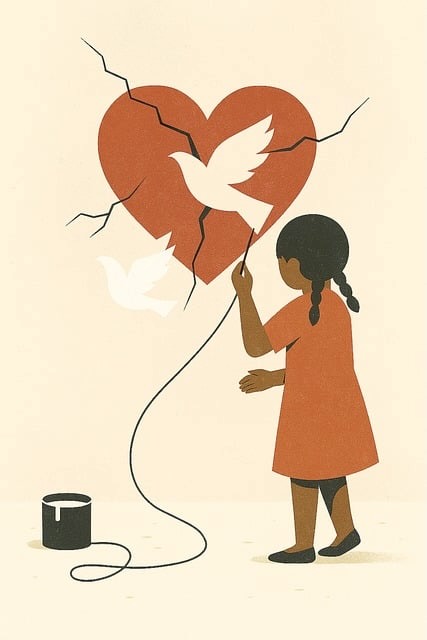
The body remembers, but the body can also learn. And within that possibility lies a quiet form of liberation. The heart, too, remembers. It remembers connection. It remembers dignity. It remembers the possibility of wholeness.
And sometimes, against all odds, it remembers how to heal.
Photo: Pixabay
Editor: Dana Gornall
Were you inspired by this? You may also like:
Exploring the Haunted House: Walking the Path of Unresolved Trauma
Comments

George’s essays have appeared in publications such as The Good Men Project, The Buffalo News, The Rochester Democrat & Chronicle, and many more. A poet at heart, his work often blends memoir, philosophy, and theological reflection, rooted in the belief that language can be both a balm and a spark.
Whether reflecting on the writings of Marcus Aurelius, the parables of Jesus, or the mindfulness of a Jain monk sweeping the ground before them, George writes to make space for wonder, doubt, and dialogue.
He joins The Tattooed Buddha as a regular columnist to explore themes of death, inner peace, activism, grief, and contemplative life in a world on fire—and to ask, again and again: How can we live as if everything we do matters?
- Who Are You Beyond Your Labels? - August 19, 2026
- From Space Earth Looks Almost Unchanged, From Within Every Moment is an Opportunity - July 20, 2026
- Trauma and Remembering How to Heal - July 9, 2026