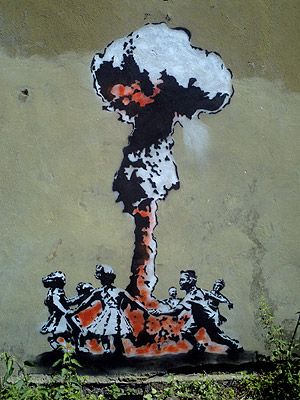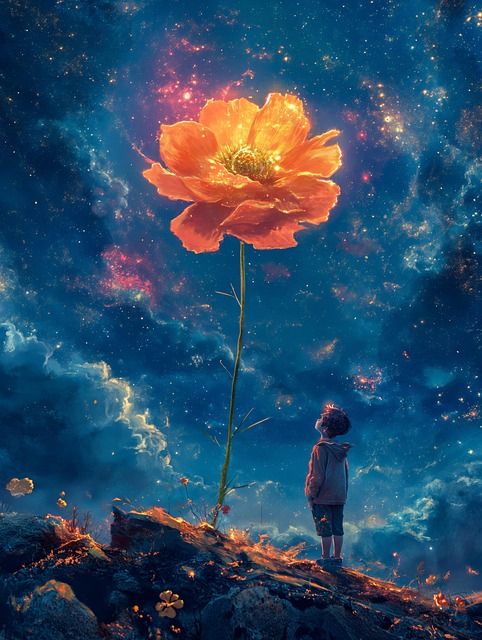
If we are truly following the Buddhist path, then hope simply doesn’t belong.
By Gerry Rickard
“Hope springs eternal” wrote Alexander Pope in 1732. And that is how we as humans usually hang onto hope – something that will “get better” or “be better” at some point in the future.
“I hope to be a better person,” “I hope to get enlightened,” “I hope to get that job.” And so on. Hope is nothing but desire. There is also the desire—or hope—for the opposite, which is usually transposed onto another person. “I hope he burns in hell,” “I hope she gets what she deserves.”
What is hope, then? It is but a simple desire for things to be different to what they are right now—a non-acceptance of what is here right in front of us, the gap between what is in front of us and how we want it to be otherwise. And with this comes suffering; for what happens when our hopes are not realised? We suffer through our disappointment, feelings of guilt or rejection, etc.
If we are truly following the Buddhist path, then hope simply doesn’t belong.
It’s a no-go area which we should gently ignore and just settle into the present moment where there is no future, or no past to judge it against. There is only this. Right here, right now. We don’t attach to any perceived outcome or expectations, for that is what we do when we hope for something. This also applies to situations where we feel that there may be “no hope,” where we feel despair for the current situation we find ourselves in—a crisis, a terminal illness, a depression.
The concept of no hope is also a rejection of things as they are.
Can we genuinely live a life of not hoping for something?
Roshi Joan Halifax writes of wise hope, where we face what is here with a gentle acceptance, recognising the reality of what is here before us. We see things as they are before choosing our next steps. Here, we can wish that things may be better, but we don’t cling to a hopeful outcome, for here is where our suffering lies.
We respond, therefore, from a place of not knowing. How can we ever know? Here we can rest without worry, anxieties, wishes for things to be otherwise, and let it all unfold, as it inevitably does.
Rather the soothing wish of Metta, where we wish ourselves well, but don’t grasp onto this wish as a solid outcome. The words, “may I be happy” do not set the same conditions as hoping to be happy, and somehow doesn’t lead to disappointment if happiness isn’t reached.
Metta enables wise hope which doesn’t lead to a place of disappointment and suffering.
From this place we can still rest in the not knowing mind—in a pure presence that doesn’t know or doesn’t care about the future. It is a place where hope does not and cannot exist, where there are no preconceptions or preconditions and where outcomes can be numerous, based on the conditions that we create in this very moment.
Hope is hopeless.
Gerry Rickard is an Irishman living in Mozambique. He has a Masters in Teaching Mindfulness from the University of Bangor in Wales, and now teaches, leads retreats and online sessions in Mozambique and beyond. A practicing Zen Buddhist he recently stitched his first ever stitch and has just completed his first rakusu in preparation for taking precepts next year with Upaya Zen Centre.
The Tattooed Buddha is looking for articles on Hope for the month of November. Would you like to be a part of it? Send us your words to: editor@thetattooedbuddha.com. See submission guidelines here.
Photo: Pixabay
Editor: Dana Gornall
Did you like this post? You may also like:
Comments

- Loving-Kindness for the Weeks That Are Too Much - October 6, 2026
- The Finger on the Glass - September 30, 2026
- Fishes’ Eyes Swim with Tears - September 12, 2026