Across traditions, the diagnosis is remarkably consistent. Gautama Buddha named craving as the root of suffering. Jesus of Nazarethwarned of gaining the world while losing the soul. In the Bhagavad Gita, Krishna counsels action without attachment to results. Laozipraises non-striving, the soft way that overcomes without force.
By George Cassidy Payne
There is a way of thinking about struggle that unsettles me.
It’s not the noble kind; not the honest labor of becoming. It’s not the daily effort required to love well, serve well or endure what must be endured.
I mean struggle as ill will.
The word itself may carry that shadow— an Old Norse echo meaning hostility, a bent or twisted intention. If that root holds, then struggle is not merely exertion. It is will turned sour. It is desire that has become inflamed. Ill will is not only hatred of another person, it can be resistance to reality. It’s a tightening in the chest that says: this moment should be different—a subtle aggression toward what is.
When the will becomes sick, it no longer moves from clarity. It moves from compulsion.
We know this feeling: The restless push to achieve, to prove, to accumulate, to secure. It can be the quiet promise we make to ourselves: Once I get there, then I will finally rest. Once the body looks a certain way, once the bank account reaches a certain number, when the recognition arrives and once the relationship stabilizes, then—
But the horizon keeps receding.
The ego is not evil. It is simply never satisfied. It wants, and once it gets what it wants, it wants again. When our identity fuses with that wanting, life becomes an endless project of self-construction. And that is a subtle form of violence.
Across traditions, the diagnosis is remarkably consistent. Gautama Buddha named craving as the root of suffering. Jesus of Nazarethwarned of gaining the world while losing the soul. In the Bhagavad Gita, Krishna counsels action without attachment to results. Laozipraises non-striving, the soft way that overcomes without force.
Different languages. Same medicine.
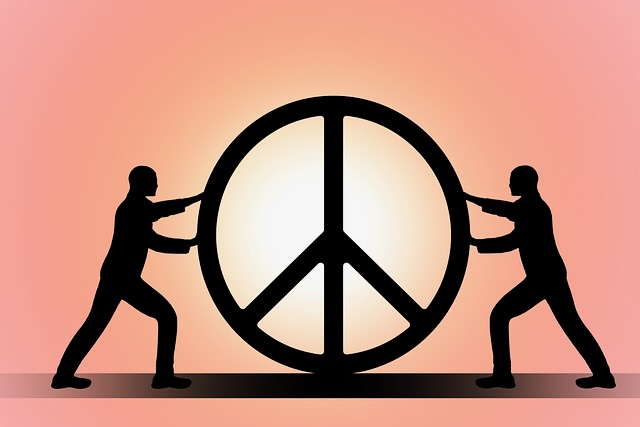
The problem is not action. The problem is the fever behind the action. Peace, in this light, is not the absence of movement. It is the absence of hostility toward the present moment. It is will that has been healed of desperation. Peace does not mean we stop creating, organizing, protesting, parenting, writing, or building. It means we no longer stake our worth on outcomes. We act because action is ours to take, not because results are ours to control.
Struggle says: When the world bends to my desire, I will be whole.
Peace says: Wholeness is not waiting on permission.
This is not a call to spiritual bypassing. There are injustices that demand resistance. There are wounds that require courage. There are systems that must be confronted. But even resistance can arise from clarity rather than hatred. Even activism can be rooted in love rather than rage alone.
Ill will tightens.
Healed will opens.
Ill will demands.
Healed will participates.
The paradox is that when we loosen our grip on outcomes, our work often becomes more skillful; less frantic and more sustainable. Compassion grows where comparison once lived. Patience appears where urgency once burned holes in the heart.
Perhaps the deepest freedom is not freedom from effort, but freedom from the need for effort to justify our existence. Peace does not strive, it does not scramble for validation and it does not measure itself against an imagined future self.
It simply rests in enoughness, and from that ground, it moves.
This is the opposite of struggle is not passivity. It is consent to what is, and love in what we choose to do next.
Photo: Pixabay
Editor: Dana Gornall
Did you like this post? You may also like:
Comments

George’s essays have appeared in publications such as The Good Men Project, The Buffalo News, The Rochester Democrat & Chronicle, and many more. A poet at heart, his work often blends memoir, philosophy, and theological reflection, rooted in the belief that language can be both a balm and a spark.
Whether reflecting on the writings of Marcus Aurelius, the parables of Jesus, or the mindfulness of a Jain monk sweeping the ground before them, George writes to make space for wonder, doubt, and dialogue.
He joins The Tattooed Buddha as a regular columnist to explore themes of death, inner peace, activism, grief, and contemplative life in a world on fire—and to ask, again and again: How can we live as if everything we do matters?
- Who Are You Beyond Your Labels? - August 19, 2026
- From Space Earth Looks Almost Unchanged, From Within Every Moment is an Opportunity - July 20, 2026
- Trauma and Remembering How to Heal - July 9, 2026