We can also see it as the “return of the light”—a ritual celebrated in many cultures over thousands of years. Both the Hindu and Jewish traditions celebrate festivals of light around this time—Diwali and Hanukkah.
By Gerry Rickard
As we come to the end of the year in the northern hemisphere, winter is a time for stillness, a time for slowing down and reflection, and for some of us, a time of darkness.
The rhythm of nature slows down, a natural cycle which isn’t always reflected in the busyness of our own lives.
Living in Mozambique the seasons are, of course, reversed and there never really is a real winter as we know it in the northern hemisphere. I sometimes find this strange, as I hardly ever feel that I allow my body to naturally slow down. But this year I find myself in dark northern Europe on a family visit and, once more I feel the need to slow, to sleep more, to do less, to take stock of my life and to look inwards.
These dark days can be depressing for some, especially for those with seasonal affective disorder. The year is at an end, the trees are bare, the earth is cold. Dark days can bring dark thoughts. For many, it’s a time of grief, fear, loss and loneliness. December 21st is a day that reflects all of this. Many of us refer to it as “the shortest day”—a day with the most hours of darkness and the least amount of light.
But the winter solstice also reflects the nonduality of our existence.
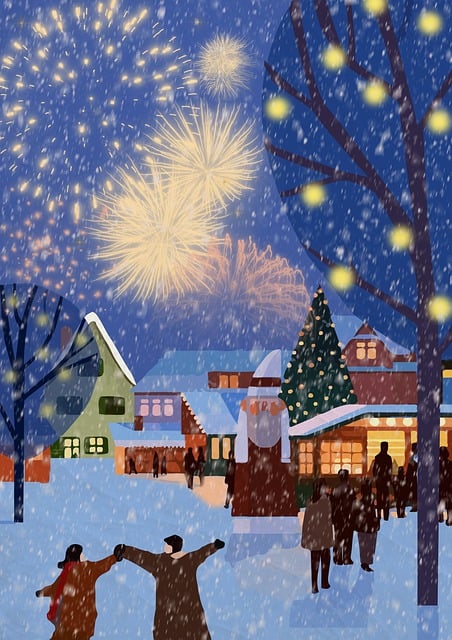
We can also see it as the “return of the light”—a ritual celebrated in many cultures over thousands of years. Both the Hindu and Jewish traditions celebrate festivals of light around this time—Diwali and Hanukkah.
Christianity celebrates the birth of Christ as the birth of the light of the world. On the shortest day, the light begins to return and the days gradually begin to get longer thereafter. I remember growing up in Ireland when older people would always comment about the “grand stretch in the evenings” around this time.
Close to my home village in Ireland lies a magnificent Neolithic chamber, in Newgrange, Co. Meath. This UNESCO heritage site is a memorable place to visit. Built over 5,000 years ago, even before the pyramids, nobody really knows its original purpose, and there have been many theories, but around the shortest day of the year (from December 19th-23rd), something wonderful happens.
As the sun rises over the horizon (if it does, in cloudy Ireland!), its rays shine along a narrow corridor and brilliantly illuminates the interior chamber that lies under the mound for 17 minutes, before the perfect alignment comes to an end. Just think—over 5,000 years ago, our ancestors were not just hunter gatherers—but had the means to read the movements of the sky and calculate this with exact precision.
If you ever visit, you can experience artificial light entering the chamber, replicating this experience. But you might also be one of 38 people drawn from over 30,000 applicants every year to witness this as it actually happens within the chamber itself on the Winter Solstice.
So when things are at their darkest, the light begins to return.
The days gradually become brighter. But in fact, the light has always been here, for without knowing darkness, how can we ever know light? Renewal, therefore, is always possible, even in the depths of our internal winters when our world is at its darkest. The light can and does return.
These are the paradoxes of our human lives. How can we know happiness without knowing sadness? Good without knowing what evil? We think our lives “should” be one or the other but as Buddhist practitioners, we know that this dualism is false, even though we may not experience it in this way. This is “not twoness.”
As Shunryu Suzuki said:
….the oneness of duality: not two, and not one. This is the most important teaching: not two, and not one. Our body and mind are not two and not one. If you think your body and mind are two, that is wrong; if you think that they are one, that is also wrong. Our body and mind are both two and one….. our life is not only plural, but also singular. Each one of us is both dependent and independent.
If happiness existed independently, it would preclude grief, pain and illness of any kind. There is always both. That is the reality of the First Noble Truth.
We’ve heard of the expression, “two sides of the same coin.” The coin itself cannot be just one side. Then it’s not a coin! We need both sides of the coin for it to exist as a coin. “Not two, and not one.” Both two and one. As Roshi Philip Kapleau said, “The failure of human beings to perceive this fundamental truth is the cause of their sufferings.”
During one of my monthly online meditations that I give, we were recently talking about non-duality.
One of the participants said something interesting—that whatever word we might use for “God” (source, light, love, the universe), only light must exist in this place. But is this true? How can we know this light, without knowing darkness, how can we know what light is, without recognizing that darkness also exists?
In the bible we have the constant struggle between light (Jesus) and darkness (Satan), the acknowledgment that darkness also exists. It was never banished or destroyed. One was not exclusive of the other. Darkness depends on light and light depends on darkness for us to know them both.
In his book, No Mud, No Lotus, Thich Nhat Hanh sums this up beautifully in this story of darkness and light.
“According to the creation story in the biblical book of Genesis, God said, “Let there be light.” I like to imagine that light replied, saying, “God, I have to wait for my twin brother, darkness, to be with me. I can’t be there without the darkness.” God asked, “Why do you need to wait? Darkness is there.” Light answered, “In that case, then I am also already there.”
And yet the word “renewal” seems to point to the fact that something needs to be renewed, that our lives are somehow broken. Renewal, however, doesn’t mean we have to become something “new” or something “better.” It just means acknowledging the darkness, dark places, or vulnerability that are here knowing that the opposite is also here, even if we cannot see it right now. And in this being present with, and acknowledging these places, we can begin to let some of the light inwards.
Only by turning towards and embracing and befriending the darkness in ourselves, can we begin to let the light inwards.
Think of it as a winter seed that is dormant and covered in darkness, under the snow. Even under the cold, hard earth, the blooming flower in the sunlight is already present.
“In the midst of winter, I found there was, within me, an invincible summer. And that makes me happy. For it says that no matter how hard the world pushes against me, within me, there’s something stronger—something better, pushing right back.” –Albert Camus
Gerry Rickard is an Irishman living in Mozambique. He has a Masters in Teaching Mindfulness from the University of Bangor in Wales, and now teaches, leads retreats and online sessions in Mozambique and beyond. A practicing Zen Buddhist he recently stitched his first ever stitch and has just completed his first rakusu in preparation for taking precepts next year with Upaya Zen Centre.
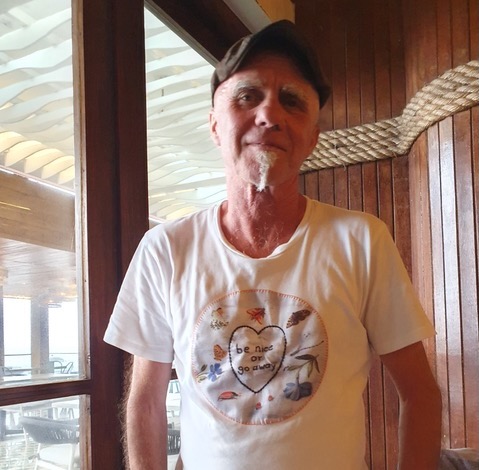
Photo: Pixabay
Editor: Dana Gornall
Did you like this post? You may also like:
Comments

- Loving-Kindness for the Weeks That Are Too Much - October 6, 2026
- The Finger on the Glass - September 30, 2026
- Fishes’ Eyes Swim with Tears - September 12, 2026