
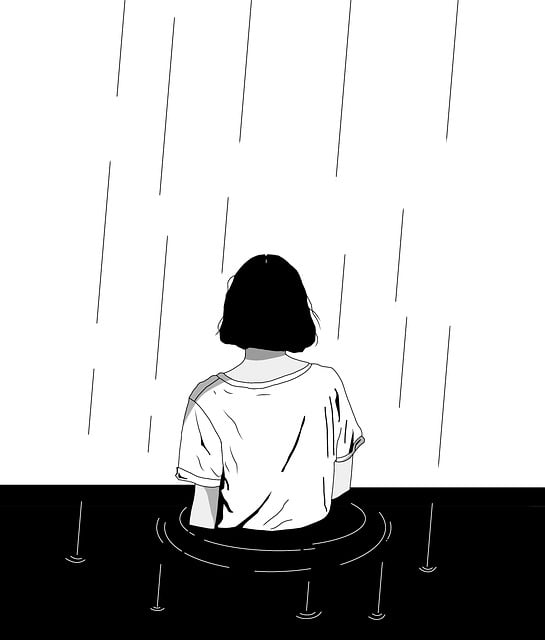
Rest has consequences in a society with minimal safety nets. Trauma and mental illness leave people raw, but systemic injustice and economic precarity fan the flames. Therapists can offer grounding and support, but many are being chewed up by conditions beyond mindfulness alone.
By George Cassidy Payne
“I just want to hide. For weeks. Months maybe. Until I can handle life again.”
She wasn’t being dramatic. She was being honest.
On the other side of my phone was a woman unraveling, not just emotionally, but logistically, existentially. Chronic mental illness weighed on her, workplace bullying chipped away at her resilience, and at home, her pain was dismissed by a husband who could not see it. And yet, she was tethered to one inescapable truth: “That doesn’t pay the overdue bills.”
This is the paradox so many people living with serious mental health challenges confront daily: their bodies and minds cry out for rest, but the world insists they produce, perform, and persevere.
The Murkiness of Despair
When I asked what she needed to get through the day, she didn’t ask for therapy, medication, or a miracle. She said: “I just want to hide.”
Hiding, in this context, is not avoidance. It is the nervous system seeking refuge—a natural, embodied response to overwhelm. And yet, the shame that often accompanies this instinct can deepen the spiral.
“It would be great to be normal, but I can’t handle my fucking brain right now,” she admitted. “When I feel okay, life is great. But these downs… they’re brutal. I just can’t handle existing.”
Living with BPD, bipolar disorder, OCD, PTSD and more, she carried an alphabet soup of diagnoses, yet none could capture the exhaustion of trying to prove her pain is real in a world that refuses nuance. Even her boss recognized someone at work was “out to get her,” yet the system offered no shelter.
When Support Systems Fail
Isolation compounded her suffering. Loved ones dismissed or misunderstood her reality.
“She makes my life a living hell,” she said of the workplace bully.
“My husband says I’m being dramatic. That I should get over it.”
Support, when it arrives, can be a warm blanket. But its absence—or its trivialization—becomes another layer of wounding.
Bearing Witness Without Fixing
I did not try to change her mind. I did not urge optimism. I simply validated her instinct to hide:
“It makes sense. Wanting to disappear for a while doesn’t mean you’re giving up. It means you’re overwhelmed. Sometimes survival looks like closing the curtains and catching your breath. That doesn’t make you weak. It makes you wise.”
People in crisis do not need platitudes, they need presence. One person who can bear witness without judgment. One person who can see murkiness without pathologizing it.
The Realities of Capitalist Survival
The hardest words came when she said: “Right, but that doesn’t pay the overdue bills.”
Rest has consequences in a society with minimal safety nets. Trauma and mental illness leave people raw, but systemic injustice and economic precarity fan the flames. Therapists can offer grounding and support, but many are being chewed up by conditions beyond mindfulness alone.
Mental health care must hold space for both truths:
The inner storm, where trauma leaves people fragmented, desperate, and raw. The outer storm, where poverty, relational betrayal, and workplace injustice add relentless pressure. This is “both/and” care—a recognition that suffering is multidimensional, and our compassion must be as wide as the world is cruel.
How We Show Up Matters
I offered no solution, only a lifeline:
“Even if you need to hide, I’ll be here. You don’t have to come out. I’ll knock now and then, just so you know someone’s still here.”
“You’re not lazy. You’re not failing. You’re surviving a storm. One that would drown a lot of people.”
Sometimes what saves someone is not a strategy, a technique, or a pep talk—it’s being believed. For clinicians, caregivers, friends, and partners, our role is not to drag someone into the light. It is to sit nearby, holding a lantern, letting them know they are seen. Their pain makes sense. Their life still matters, even in the murk.
“Suffering is not wrong; ignoring it is. To be present for suffering is the first step toward awakening.” — inspired by Buddhist wisdom
Disclaimer: The individuals and situations described in this article are composites, drawn from multiple experiences. Any identifying details have been changed to protect privacy, and no single person should be inferred from these accounts.
The Tattooed Buddha is looking for articles on Hope for the month of November. Would you like to be a part of it? Send us your words to: editor@thetattooedbuddha.com. See submission guidelines here.
Photo: Pixabay
Editor: Dana Gornall
Did you like this post? You may also like:
Philosophy and Depression: The Need to Understand Keeps Me Going
Comments

George’s essays have appeared in publications such as The Good Men Project, The Buffalo News, The Rochester Democrat & Chronicle, and many more. A poet at heart, his work often blends memoir, philosophy, and theological reflection, rooted in the belief that language can be both a balm and a spark.
Whether reflecting on the writings of Marcus Aurelius, the parables of Jesus, or the mindfulness of a Jain monk sweeping the ground before them, George writes to make space for wonder, doubt, and dialogue.
He joins The Tattooed Buddha as a regular columnist to explore themes of death, inner peace, activism, grief, and contemplative life in a world on fire—and to ask, again and again: How can we live as if everything we do matters?
- Who Are You Beyond Your Labels? - August 19, 2026
- From Space Earth Looks Almost Unchanged, From Within Every Moment is an Opportunity - July 20, 2026
- Trauma and Remembering How to Heal - July 9, 2026


