As someone who has spent decades documenting dictatorship, propaganda and the psychology of authoritarianism, I can say this without hesitation: one of the most dangerous forces on Earth today is not only the violence of weapons, but the violence of words. Lashon Harah is not metaphorical. It is structural. It is the architecture of modern warfare—the front line of consciousness itself.
By Alan Clements
There are moments when an ancient teaching reenters your life with the searing force of revelation.
For me, it struck in the form of a Hebrew phrase I had merely brushed against years ago: Lashon Harah—“evil speech.” A simple translation, yes, but a definition so thin it barely scratches the true depth of its danger.
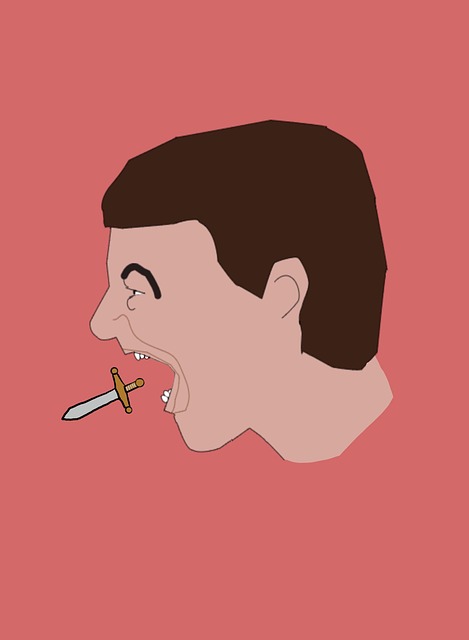
Lashon Harah is not merely gossip or slander. It is the precise, ancient name for the dark art of wounding with words. It is speaking ill of another human being even when the details are true—and especially, perhaps more dangerously, when they are false, distorted, or whispered without any regard for accuracy. It is the weaponization of language. It is language forged into a blade — the subtle, everyday militarization of the tongue.
When this teaching resurfaced recently, it struck me with unflinching, X-ray clarity. Because Lashon Harah is not an ancient moral relic. It is the pulsing, psychic operating frequency of our global moment—the sinister hum beneath domestic and international media, political discourse, and the algorithmic fever we call social media.
We live in an atmosphere saturated with the casual willingness to vilify, distort, humiliate, or annihilate another human being’s dignity for entertainment, outrage clicks, partisan gratification, or the adrenaline of belonging to a tribe that requires an enemy. Today, truth itself is used as a weapon. And lies—polished, repeated, amplified at industrial scale—travel with the speed and authority of scripture.
This is not a minor moral lapse. It is an existential threat to human sanity.
As someone who has spent decades documenting dictatorship, propaganda and the psychology of authoritarianism, I can say this without hesitation: one of the most dangerous forces on Earth today is not only the violence of weapons, but the violence of words. Lashon Harah is not metaphorical. It is structural. It is the architecture of modern warfare—the front line of consciousness itself.
This understanding grew sharper for me when someone recently asked about the most defining quality of my long relationship with Daw Aung San Suu Kyi, Myanmar’s imprisoned elected leader and Nobel Peace Laureate.
The question transported me back nearly three decades, to 1995–96, when Aung San Suu Kyi and I sat together in her home in Yangon, freshly released from her first six years of detention, to create The Voice of Hope, a book of dialogues about democracy, dignity, fearlessness, and the spiritual architecture of freedom. Somewhere in the midst of those conversations, we discovered something that startled us both: we shared the same meditation teacher—the late Buddhist master Sayadaw U Pandita.
When I asked her about her most memorable teaching from him, she did not hesitate. She answered with a clarity that felt carved from her core: Right speech. Non-vilification. Non-demonization. Even of the so-called enemy.
Then she said something I have never forgotten—something that shaped her life and reshaped mine: “This revolution must be a revolution of conscience. We cannot mirror the anger or the violence of the oppressor.”
She went on to describe Sayadaw U Pandita’s teaching on skillful speech with a precision that revealed its depth. Know your intention before you speak, he taught her; words without beneficial intention are daggers in the shadows.
Feel your heart—does your language uplift or denigrate?
Speak only when the moment is right—some truths must wait; others must remain unspoken. Let language be energy, not aggression or coercion—spacious, resonant like fine music. Place yourself inside the heart of the one you speak about—will your words awaken them or further entrap them? And above all, he insisted, release all attachment to outcome. Speak freely, unconditionally, non-transactionally—only from the purity of motivation to uplift — never to punish, never to injure.
Then she said something so quiet it felt consecrated: “This is why our Dhamma embodies ahimsa—harmlessness—a revolution of reconciliation, with ourselves and especially with our so-called enemy.”
In that moment, I understood that Aung San Suu Kyi’s leadership was not merely political—it was spiritual engineering, a form of moral design. Speech for her was not rhetoric; it was conscience made audible, a living extension of her practice.
And it was through that lens that the meaning of Lashon Harah crystallized for me in a new way. If the world had understood the moral genius of her commitment to right speech, it would have understood the magnitude of what she and her colleagues were attempting: a revolution of the spirit, as they called it, in how human beings treat one another at the most elemental level—as relational creatures, grasping the power of the human voice—speech itself as the catalyst for revolutionary change.
This understanding returned to me while completing my new book, Politics of the Heart: Nonviolence in an Age of Atrocity. When I write about ending war, I am not speaking only of artillery or airstrikes or the machinery of death. I am speaking of the interior war that precedes every outer one—the daily microaggressions of contempt, rumor, cruelty, and dehumanization that normalize atrocity long before the first bomb falls. A culture that permits Lashon Harah will eventually permit physical violence. One is rehearsal for the other—the warm-up act for catastrophe.
Which brings me—inevitably, painfully—back to Aung San Suu Kyi.
For more than 35 years, I have witnessed her devotion to what she calls the Revolution of the Spirit—a revolution rooted in conscience, compassion, and the refusal to dehumanize even one’s so-called enemies. She spoke of national reconciliation not as a political slogan but as a moral necessity. Even after decades of imprisonment, harassment, demonization, and incalculable personal sacrifice, she refused to engage in hate speech. She refused to vilify the generals who held her captive.
She critiqued systems, not souls; policies, not persons; behavior, not humanity. This discipline—this spiritual restraint—is almost incomprehensible in the modern world. It defies the reflex of retaliation. Yet it is precisely the essence of nonviolence.
And how did the world respond?
With Lashon Harah on a global scale. With distortions, fabrications, vilifications—much of it propagated by people and institutions that claim to uphold human rights and decency. She became the target of a moral feeding frenzy, devoured by the very rhetoric she refused to wield. A woman who spent her life humanizing the oppressed was suddenly dehumanized by those who had once praised her. Facts were twisted. Narratives were invented.
Her legacy was shattered, not by reason, but by the unrestrained violence of speech.
I watched this with heartbreak but not surprise. Because a culture addicted to Lashon Harah will always turn its knives on those who refuse to participate in its cruelty. Aung San Suu Kyi’s commitment to national reconciliation—the insistence that even perpetrators of harm must one day be welcomed into a future without hatred—was too radical for a world addicted to retribution. She demanded a politics beyond vengeance. And in doing so, she revealed the moral poverty of a global culture that worships punishment more than peace.
Her example matters now more than ever.
If we want peace—real peace—we must end the war we wage with words. If we want nonviolence, it must begin with our speech. If we want reconciliation, we must stop the daily assassination of human dignity with rumor, contempt, and performative outrage.
Lashon Harah is the unconscious pandemic of our age: the normalization of cruelty, the erosion of empathy, the collapse of conscience. The antidote is not silence but intentional, evolutionary speech—language rooted in clarity, compassion, truthfulness, and the refusal to diminish another’s humanity, even when we oppose them. Even when they oppose us. Even when it breaks our heart to practice such restraint.
Aung San Suu Kyi modeled this at a staggering personal cost. Her life is a reminder that the first act of liberation begins with the tongue—with the courage to speak, and to refrain from speaking, from the heart.
Ending war begins with ending Lashon Harah. The revolution of the spirit begins with the refusal to weaponize language. Human dignity depends on whether we choose to injure with our words—or to redeem, restore, and rehumanize one another through them.
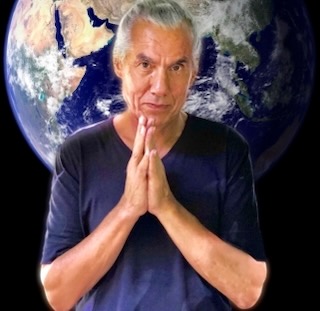
Alan Clements is an author, speaker, and former Buddhist monk who has spent four decades documenting the struggle for freedom in Myanmar and the psychological architecture of dictatorship. His latest book, “Politics of the Heart: Nonviolence in an Age of Atrocity,” weaves memoir, Dharma, political insight, and psychedelic activism into a bold manifesto for ending war—both inner and outer.
Photo: Pixabay
Editor: Dana Gornall
Did you like this post? You may also like:
Serving Right Speech: Why We Shouldn’t Call Her a “Karen” (No Shade)
Comments

- Loving-Kindness for the Weeks That Are Too Much - October 6, 2026
- The Finger on the Glass - September 30, 2026
- Fishes’ Eyes Swim with Tears - September 12, 2026