I was suffering because it’s in the nature of life to suffer: illness happens, pain happens, death happens, even the groovy things like dub reggae, samosas and Kung Fu Panda can’t hide the fact that life sucks, if you allow it to. The Second Noble Truth, with all the semantic shenanigans associated with what dukkha really means, is likewise very simple.
By Tim Cooper
Some time ago I went down with a throat infection.
It started on a Tuesday morning, on Carnival Day, when people in Galicia put on fancy dress, hit the streets, drink a lot, shout a lot and eat. God, do they eat.
One typical carnival dish is cocido—a barbaric, Pantagruelesque melange of every imaginable part of a pig, plus chorizo, potatoes, chickpeas and greens, all hurled into a cauldron, boiled for hours and smothered in olive oil and smoked paprika. Not Buddhist, not spiritual, not for Esalen retirees. A delight for hungry ghosts like me. I can cook it reasonably well, and now that I am an honorary Galician, it’s only logical that a decent local citizen like me should prepare four to five times the amount we actually needed.
I started to feel something was wrong with my throat while I was cooking.
I should have known something was off because I almost attacked a shop assistant with a baguette when I went out for bread. I could feel something on the left side of my throat like I’d been chewing on barbed wire, and it was getting worse by the hour. Sheer stubbornness, and avarice (all that money spent on pig!) drove me to attempt a feeding frenzy, a la Homer Simpson. I’d cooked the damn cocido and I was going to eat the damn cocido, but my heart and throat were just not in it.
A visit to the local clinic that night offered no solution. Some kind of a viral thing, they said; paracetamol and a stiff upper lip. A feverish night, little sleep and another visit to a different clinic the next day. This time the doctor said it was inflamed tonsils.
Buddhism says something very simple, and that something is so simple I don’t have the experience, intelligence or arrogance to even attempt to define or explain it.
I’ve read the Four Noble Truths more times than I care to remember, and they, like so many other words, just wander about like mental plasticine in my mind. I shape and twist them to make up part of my mental maelstrom of ideas, criticisms, cast iron values that change according to weird whims and caprices, reactions and counter-reactions to pressed buttons; imagined offenses, all too infrequent wishes for the wellbeing of others, and all too frequent worries about the future. Sometimes when thinking of some mental listener I’d like to impress, I tell them about the Four Noble Truths, because it’s all so very logical, and, er, that’s it.
Resistance to certain realities is an integral part of human nature, so I’ve been told, and I was resisting like Winston Churchill after Dunkirk.
I was resisting being ill, I was resisting the pain (the mere act of swallowing was like drinking a razor blade cocktail), I was resisting my partner’s well-meaning and very sensible advice. Then the cartoon lightbulb slowly flickered into life: the First Noble Truth says that life is suffering, and that’s it.
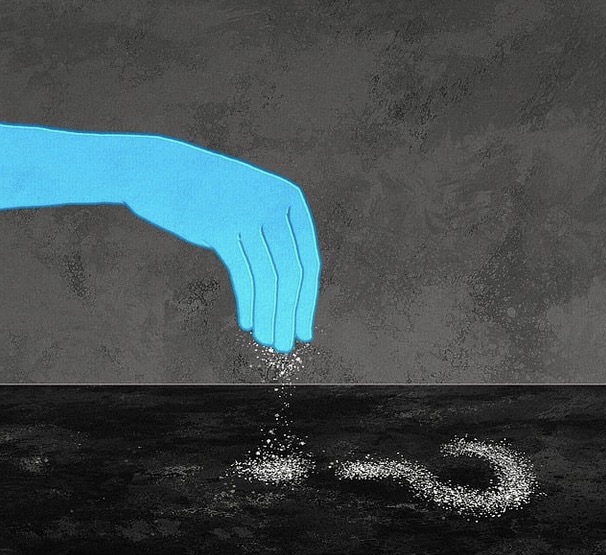
I was suffering because it’s in the nature of life to suffer: illness happens, pain happens, death happens, even the groovy things like dub reggae, samosas and Kung Fu Panda can’t hide the fact that life sucks, if you allow it to. The Second Noble Truth, with all the semantic shenanigans associated with what dukkha really means, is likewise very simple.
What’s making you suffer is that you don’t like the thing that’s happening because you think it isn’t nice. Nice to me means lying on a beach in a grass skirt, eating bananas with Minions and playing the ukelele. Having a throat infection is not nice.
I was lying on my bed, shivering with fever, and getting into a hefty “why me” jag, when the light bulb flickered on.
Since then, it’s more or less stayed on: life is pain, and throat infections, and clients that don’t pay, and AI that takes work away from you, and stupid adverts, and Steven Segal films, and mass invasions of Portuguese men-o-war every August to establish a bridgehead on my favourite beach. There is no escaping this. It just is. And it’s all so horrible because I refuse point blank to accept it because it is not nice.
I’d love to say that at that moment of profound realisation I gratefully entered the Golden Void while chanting the Heart Sutra, but I quickly drifted off into a psychotic fugue about Putin putting something in the water supply to make everyone really stupid. There has to be some kind of explanation as to why everyone has got to be so stupid recently. But that moment of rare lucidity didn’t go away and it’s something I will always be very grateful for.
I’d like to say that I am also deeply grateful to my tonsils and to those three days of pain, but I can’t quite get that far. But it did make me a better patient (normally I am a cantankerous, sulky old fuck when I’m ill), it allowed me to be sick, and bear it all with a little more dignity than the big, whining baby that I often turn into when my health suffers.
The blinding beauty of it all is that there is a solution.
And it’s a moment of rare beauty when Buddhism stops being something you read a lot about and actually do. But next time round I really, really would like to find the next realisation while hugging a Minion and eating bananas.
Photo: Pixabay
Editor: Dana Gornall
Tim Cooper is a more or less practicing Buddhist and recovering alcoholic who’s lived in Spain for over half his life. After many years of stumbling about in the lush gardens of Buddhism, picking one flower here and another flower there, he finally settled down and is trying to make sense of it all in the Tibetan Buddhist tradition, and generally trying to be a bit nicer. He works as a translator, teacher and facilitator with fellow ex-drunks. He likes flowers, rugby, bad science fiction films and cooking. He also likes to think he writes like Hemingway, but the rejection slips tell another story.
Did you like this post? You may also like:
Comments

- Loving-Kindness for the Weeks That Are Too Much - October 6, 2026
- The Finger on the Glass - September 30, 2026
- Fishes’ Eyes Swim with Tears - September 12, 2026