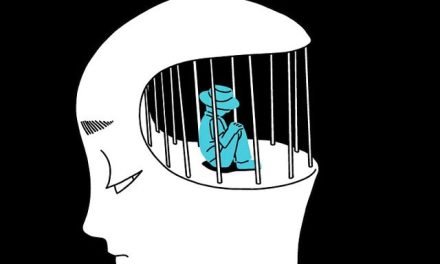
Mental health systems are often calibrated for extremes. Care is mobilized when distress becomes disruptive, visible, or dangerous. Until then, many people are told—implicitly or explicitly—to cope, wait, self‑regulate, or come back when things are worse.
By George Cassidy Payne
There is a particular kind of suffering that doesn’t look dramatic enough to trigger alarms and doesn’t fit neatly into diagnostic thresholds, but quietly erodes a person from the inside.
It sounds like this:
I’m too much for the people in my life.
I’m not severe enough for professionals to help.
I’m a burden.
I’m replaceable.
It would be more efficient if I were gone.
This is not psychosis.
It is not manipulation.
It is not philosophical nihilism.
It is what chronic rejection and institutional indifference sound like once they turn inward.
The Middle Zone: Where People Fall Through
Mental health systems are often calibrated for extremes. Care is mobilized when distress becomes disruptive, visible, or dangerous. Until then, many people are told—implicitly or explicitly—to cope, wait, self‑regulate, or come back when things are worse.
The result is a cruel paradox:
Ask for help early, you’re “not severe enough.”
Wait until you collapse, you’re treated as a problem to manage, not a person to help.
People caught in this middle zone learn a devastating lesson: pain only counts once it becomes uncontainable. Over time, that lesson reshapes identity. Distress becomes framed not as something happening to a person, but as proof of what they are.
This is how “I am struggling” quietly becomes “I am disposable.”
Why the Language Turns So Harsh
Clinicians often hear language that shocks: metaphors of being scrapped, erased, put down, buried, replaced. This isn’t exaggeration for effect. It’s the mind reaching for imagery that matches the felt experience of being dehumanized. When someone says, “I’m just a cog in a machine,” they are naming a relational truth: I am treated as interchangeable; repair is not worth the effort.
This kind of language signals toxic shame, not moral failure. Shame collapses complexity into verdicts. It replaces nuance with absolutes:
everyone
no one
never
nothing
That cognitive narrowing is not insight, it’s injury
Ambivalence Is Not Hypocrisy
Many people in this state express two truths at once: A desire for the pain to end and fear of death and the unknown.
This is not contradiction. Clinically, it’s called ambivalence, and it is the most common feature of suicidal crises. The presence of fear, hesitation, or reluctance does not weaken concern, it strengthens it. It means the survival system is still active, even while overwhelmed.
Importantly, ambivalence is where intervention works best if it is met with care rather than dismissal.
How Clinicians Respond (When Care Is Done Well)
When someone speaks from this place, effective clinicians do not argue with their worth, rush to reassurance, or force optimism. They focus on three grounded priorities:
1. Safety Without Criminalization
Direct questions about self‑harm are asked calmly and respectfully, without assumption or threat. The goal is not control—it is protection. Being taken seriously should not require becoming unmanageable.
2. Function Over Judgment
Rather than debating whether the thoughts are “true,” clinicians explore what they are doing. Often, harsh self‑talk serves as a way to make rejection make sense, pre‑empt further disappointment, regain control in an uncontrollable environment and understand that function reduces shame and opens the door to change.
3. Containment Before Meaning
In acute despair, the task is not to find purpose or rewrite a life story. It is to reduce isolation, stabilize the nervous system, and keep the person alive while the wave passes. Meaning can come later. Survival comes first.
What This Demands of Systems
If people consistently feel unseen until they break, the problem is not individual resilience, it is structural design.
Humane systems recognize distress before it becomes catastrophic and offer care without requiring spectacle. They treat self‑awareness as a strength, not a disqualifier and respond to suffering as a medical and relational issue, not a behavioral one. No one should have to become “fully unwell” to be worthy of help.
A Final Word
When someone says, “I’m too broken to be accepted,” they are not revealing a truth about themselves. They are reporting the cumulative impact of being unmet—by people, by institutions, by care models that confuse scarcity with triage and distance with professionalism.
People are not machines.
They are not cogs.
They are not replaceable parts.
And when someone begins to believe they are, that belief is not evidence of worthlessness — it is evidence of pain that has gone on too long without relief. The most radical, practical response is also the simplest: take the suffering seriously before it turns fatal.
That is not wasted effort. It is the point of care.
Photo: Pixabay
Editor: Dana Gornall
Were you inspired by this? You may also like:
How Ego Death at a Bachelorette Party Helped My Mental Health
Comments

George’s essays have appeared in publications such as The Good Men Project, The Buffalo News, The Rochester Democrat & Chronicle, and many more. A poet at heart, his work often blends memoir, philosophy, and theological reflection, rooted in the belief that language can be both a balm and a spark.
Whether reflecting on the writings of Marcus Aurelius, the parables of Jesus, or the mindfulness of a Jain monk sweeping the ground before them, George writes to make space for wonder, doubt, and dialogue.
He joins The Tattooed Buddha as a regular columnist to explore themes of death, inner peace, activism, grief, and contemplative life in a world on fire—and to ask, again and again: How can we live as if everything we do matters?
- Who Are You Beyond Your Labels? - August 19, 2026
- From Space Earth Looks Almost Unchanged, From Within Every Moment is an Opportunity - July 20, 2026
- Trauma and Remembering How to Heal - July 9, 2026