Then, one night, I decided to dive back into my life, and most of the loneliness and fear I was harboring disappeared. “Poof.” I stopped being a spectator and put all my focus on practical action. My past swam back into view, and I came to terms with it. It’s part of me again; it’s present.
By Johnathon Lee
Imagine being free from your past and future.
You’re here and now, attending to the comings and goings of your senses, the world wandering through your revolving doors. You’re not chasing pleasant sensations or running from unpleasant ones. You’re like an innkeeper, letting everything pass on through.
One way to get to this point is to let go of your past and stop forming firm views of your future. Past and future aren’t real. There’s only ever this still and shining moment.
Then your loved one dies. They’re gone; fading into the nonexistent past. What do you do with your feelings and memories? Well, you let them come and go. There might be grief, but it’s a sign of residual clinging and craving. It’ll pass if you let it. Passing without a trace, like footprints erased with sand.
If you’ve practiced basic presence enough, then there won’t be any grief—only the grieving. Then you can help them through their pain, unburdened from your own.
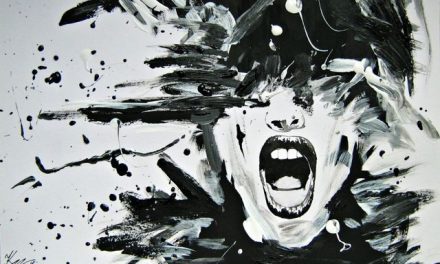
Or, you can say fuck all that. You can live in the past and make precise plans for the future, going through countless pains and losses. You can grieve, wailing and raging about the way things are. In quiet moments, you can look back at your lost loves and feel time’s sharp and heavy icicle, letting it melt and flow from your tired eyes.
Which one’s the better life? I’m not asking which one feels better. Which one is better?
A bright Zennist would say that comparing is the devil’s work, but that’s just a way to shrug off our own humanity. We do compare, and there are good reasons to. You’ve gotta sort out the toxic berries. The first option here is passive observation. The second is active participation. Life is a happening, a flow of events. We can’t disconnect from it without ceasing to exist, but we can sure try.
I’ve spent many years in spectator mode, just letting things happen.
Looking back, I was secretly scared and miserable the whole time. I was trying to be someone else. I was trying to be dead and alive at the same time. I spent the days studying and sitting, studying and sitting as my mind kept spinning through its cycles. I let it spin, aware of it but not interfering. I was obsessed with Buddhism, and Buddhism asks for obsession. We’re trading worldly, undisciplined fixations for healthy, liberating ones.
Then, one night, I decided to dive back into my life, and most of the loneliness and fear I was harboring disappeared.
“Poof.”
I stopped being a spectator and put all my focus on practical action. My past swam back into view, and I came to terms with it. It’s part of me again; it’s present. I’m here but also everywhere I’ve been. Jung would call it individuation. I have creative ambitions again, and I’m working toward them each day. I suffer, but I also rejoice, and they share the same space as twins.
Buddhism can make you into an NPC, a zombie who’s disconnected from the past and future, never seeing that that’s what fills the present with meaning.
It’s all worth the pain, though it doesn’t always feel like it.
Things would be different if I believed in Buddhist myths and visions of Shambhala, but I never have. There’s no rebirth. There’s no individual karma. We all enter parinirvana. We sample it when we’re sleeping. As for Bodhisattvas, you create them when you view everyone as a teacher. No one is a bodhisattva in themselves. We’re all just people. We’re just human, and each of us is having our own unique trips.
That’s the marvel, isn’t it? That’s the reason to participate in our own lives. Buddhism—when it’s taken as a passive, receptive approach to experience—can make you miss all of the messy good stuff that makes being human worthwhile.
One of my old teachers hardly ever talked about Buddhism. He mostly just made jokes and tried poking holes in all of my views. I didn’t get it at the time. I thought he was missing the point. It turned out that I was, but maybe I had to.
You have to be wrong to learn.
If we were right about everything, then we’d know everything, and then we’d stagnate. There’s no meaning without mystery. If we need a compass, a way to tell if we’re screwing things up or not, I recommend thinking about our deathbed days. The things we think, say and do right now are going to determine whether you look back with gratitude or regret.
I realized that my deathbed self wouldn’t want me to just sit watching everything pass by.
He’s going to want me to cling tight to what I love, and then suffer deeply because of it. He’s going to want me to assert my quirky independence, not smile vacantly as a reflection of the whole. He’s going to want me to be passionately kind, but also feisty in the face of perceived injustice.
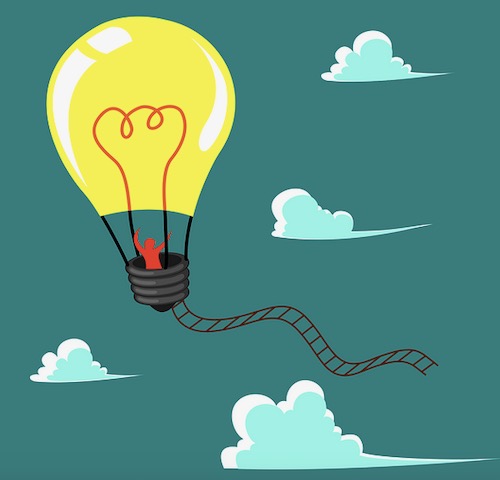
Ultimately, he needs me to be both the passive spectator and the active participant at the same time. This is where the magic happens. The innkeeper is also a guest. The Buddha was human too.
You don’t have to just be present or just dwell on the past. If you’re going to let anything go, let it be polarized thought. There’s great freedom in “both,” and it comes from the wisdom that neither X nor Y can create the best possible world on their own.
Don’t let this go. Hang on tight, and let go at the same time. One foot in peace; one foot in passion. One hand resting in your lap, and the other painting a masterpiece.
Live in a way that will make your dying self smile.
Photo: Pixabay
Editor: Dana Gornall
Did you like this post? You may also like:
Comments

- Buddhist Struggle: Love, Happiness & Nihilism - June 2, 2026
- How the Walk for Peace Brought Me Back to Buddhism - February 11, 2026
- The Path of Emptiness - December 12, 2025