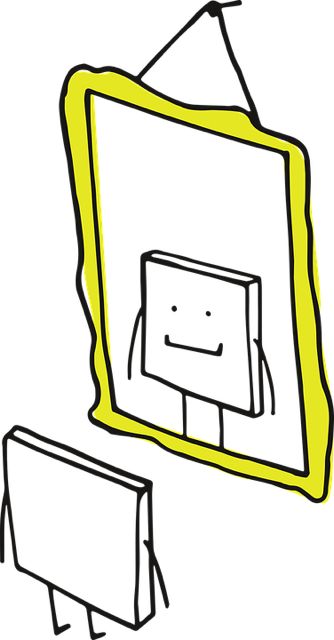
What does it mean to be perfect just as we are? It means that we are just right, just as we are. This face, this name, this mind, this whatever, is just right for us. It is who we are, the reality of us. We might want to be something or someone else, but we’re not.
By Zuiko Redding
I hope you were able to sit this morning.
Zazen is important as we negotiate our lives. It gives us time to unwind the knots, and to remember that we’re perfect just as we are. I used to hear this a lot from my early teacher, Tozen Akiyama in Milwaukee. By way of explaining, he would add, “A three-legged chair is perfect as a three-legged chair.”
It was one of those remarks I’ve carried with me, turning it this way and that, living it.
What does it mean to be perfect just as we are? It means that we are just right, just as we are. This face, this name, this mind, this whatever, is just right for us. It is who we are, the reality of us. We might want to be something or someone else, but we’re not.
We’re just this, as Dogen would say.
We are perfect as just this because imperfect/perfect, good/bad, and all those other discriminations are our ideas. They are not the reality of us. We are just this, just right in our existence. We have neither too much of anything, nor do we lack anything. There’s nothing to crow about and nothing to be embarrassed about. We are perfect examples of this very person, unique in all creation.
It may take a while to get our minds around this, but it frees us.
When we see our lives as just right, as a perfect example of a life like ours, trust opens up. We befriend ourselves rather than judging and criticizing. We get curious about who we are and why we do what we do, viewing our dumb mistakes as fine examples of dumb mistakes, seeing that they’re not useful, and learning how to avoid them.
The great boulders of self-recrimination and shame roll off our backs and we’re able to move and be constructive. We can learn new things more easily because we’re willing to play, experiment, and sometimes make total fools of ourselves.
Trusting ourselves, we stop wanting to be someone else, the “perfect” someone we’ve constructed in our minds. Instead, we make ourselves at home in our own skins. We become content and easy to be with. We trust our wisdom and act on it, knowing that doing our best is perfect. Maybe our idea will work, maybe it won’t. If it doesn’t, we’ll know to take another road. When we make mistakes, our wisdom grows.
Being at home in our own skins, we stop being obsessed with ourselves.
Our attention turns outward, toward the rest of reality. We see that others, like ourselves, are perfect just as they are, no matter how much they irritate us—or charm us. We acknowledge them as perfect examples of who they are, realizing that it’s not our mission in life to refurbish them into people who are more comfortable and appealing to us. Instead, we listen with curiosity, looking for ways to help the situation. We begin to work toward the well-being of the world with cheerful, active mind.
Zuiko Redding is the resident teacher at Jikyouji – Cedar Rapids Zen Center in Cedar Rapids, Iowa in the United States of America. She began studying and practicing Zen Buddhism as a university student in Houston in the early 1960s.
In 1992, she left her career as a sociology professor to receive novice ordination from Tsugen Narasaki Roshi and and enter training at Shogoji Monastery in Japan. She received dharma transmission from Narasaki Roshi in 1996. She returned to the United States in 1997 where she and five other practitioners founded Jikyouji in April 2000.
This article originally appeared in Cedar Rapids Zen Center’s Facebook post on December 19, 2021.
Photo: Pixabay
Editor: Dana Gornall
Did you like this post? You may also like:
Comments

- Loving-Kindness for the Weeks That Are Too Much - October 6, 2026
- The Finger on the Glass - September 30, 2026
- Fishes’ Eyes Swim with Tears - September 12, 2026