Hatred and cruelty are taught, reinforced, and shaped by neglect, trauma, and unhealed suffering. The question for society is not whether we can punish wrongdoing—we always can—but whether we are willing to invest upstream, where intervention actually prevents wrongdoing before it occurs.
By George Cassidy Payne
We live in a culture obsessed with what people do—their crimes, their missteps, their failings.
Justice, accountability, and social order demand it. But there is another, quieter, and far more revolutionary question: What happened to you?
I want to be unequivocal: in no way am I justifying Hitler’s beliefs or actions. In no way am I trivializing the deaths of millions of Jews and others at the hands of a lunatic regime. In no way am I suggesting that trauma-informed care could have stopped him once he had seized power. That is not the point.
The purpose of this essay is to advocate for a deeper, more comprehensive understanding of trauma-informed care as a radical expression of empathy and compassion, and as a preventive measure to reduce the likelihood that individuals might follow paths toward extreme cruelty and destruction.
A Brief History of Trauma-Informed Care
Trauma-informed care (TIC) is both a philosophy and a set of practices designed to recognize the widespread impact of trauma, understand paths to recovery, and create systems that actively prevent re-traumatization. The term began entering professional and public discourse in the late 1990s and early 2000s, particularly in mental health, social work, and education.
One of the seminal moments was the recognition of the Adverse Childhood Experiences (ACE) study, published in 1998, which documented the strong correlation between early trauma and a wide range of negative health, social, and behavioral outcomes.
At its core, TIC shifts the question from “What is wrong with you?” to “What happened to you?” It acknowledges that trauma is often invisible but profoundly shapes behavior, relationships, and decision-making. Its goals are:
Awareness and recognition: Equip caregivers, educators, social workers, and institutions with the knowledge to identify trauma’s signs.
Safety and trust: Create physical and psychological environments where individuals feel safe and supported.
Empowerment and collaboration: Promote agency, resilience, and participation in decisions affecting one’s life.
Prevention of re-traumatization: Design systems, policies, and interactions to reduce additional harm.
Since its formal emergence, TIC has been increasingly integrated into schools, healthcare, juvenile justice systems, and social services. Research indicates that TIC practices can improve engagement, reduce behavioral problems, enhance emotional regulation, and even decrease recidivism in justice-involved youth.
In education, trauma-informed approaches have been shown to reduce suspensions by up to 30 percent and improve social-emotional learning outcomes across diverse school settings.
However, the success of TIC is mixed and dependent on implementation. Challenges include limited resources, inconsistent training, and institutional inertia. TIC is not a panacea; it is a probabilistic tool, capable of mitigating risk but never guaranteeing a specific outcome. Its principles must also be culturally responsive and context-sensitive, recognizing that trauma manifests differently across communities and social contexts.
In essence, TIC represents a radical form of compassion in practice. It seeks not merely to respond to trauma after the fact but to prevent it and to create a society that responds to suffering with understanding and foresight.
Why We Judge Before We Understand
Human nature predisposes us to judge actions quickly rather than explore their causes. Cognitive biases like the fundamental attribution error lead us to attribute behavior to inherent character flaws while underestimating situational pressures or trauma.
Our minds prefer fast, intuitive moral judgments, a survival mechanism that maintains social cohesion but leaves little room for curiosity or reflection. We also fall prey to the just-world bias, assuming that people’s actions reflect an inevitable moral order, and our emotional responses—anger, disgust, fear—narrow our attention, amplifying punitive impulses. Social pressures reinforce these tendencies: condemning wrongdoing signals loyalty to shared norms, while asking why someone acted harmfully can feel risky or even morally suspect.
Trauma-informed care challenges these biases. By slowing judgment and cultivating curiosity about what happened to a person, TIC fosters empathy, prevents re-traumatization, and allows society to intervene before suffering escalates into harm.
No One is Born a Mass Murderer
To see the stakes of trauma-informed care in stark relief, consider one of history’s most infamous figures: Adolf Hitler. His early life was marked by fear, loss, and repeated rejection. He had a fraught relationship with his authoritarian father, a deep attachment to his mother, and the deaths of both parents left him vulnerable and isolated.
Twice rejected by the Vienna Academy of Fine Arts and living in poverty and marginalization, he internalized failure and resentment toward institutions and society itself. Military service in World War I brought camaraderie, purpose, and discipline, but defeat and exposure to war trauma compounded feelings of betrayal and grievance. After the war, these unresolved traumas fused with extremist ideologies, ultimately fueling political extremism that culminated in genocide.
This is not a story to excuse his actions. Hitler’s choices were his own. But it illuminates the stakes of ignoring trauma and the radical potential of compassion that begins with listening, not judging.
Trauma increases risk but does not determine behavior. Hitler was not inevitable. Early intervention, supportive mentorship, and societal structures attentive to trauma could have altered his trajectory, even without absolving moral responsibility.
While history offers extreme examples, smaller-scale, everyday cases of trauma demonstrate the same principle: children who experience chronic neglect, bullying, or abuse are statistically more likely to struggle with aggression, anxiety, and maladaptive behaviors. Trauma-informed interventions in schools, families, and community programs can reduce these outcomes, showing that prevention works at all levels of risk.
No one is born a mass murderer.
No one is born an anti-Semite, a hater of homosexuals or a tyrant. Hatred, cruelty, and extremism are learned, often seeded in fear, rejection, and unhealed trauma. They are shaped by experiences, by the environments we grow up in, by social and institutional neglect, and by the ways trauma is ignored, punished, or left to fester.
Mencius, the Chinese philosopher, argued that all people are born with an innate sense of goodness, a moral seed that flourishes under the right conditions. When we neglect that seed, when environments are hostile or abusive, the potential for cruelty can emerge. Trauma-informed care works to nurture this inherent potential, to create conditions in which human goodness can grow, and to prevent cycles of harm before they harden into extremism.
As Holocaust survivor and psychiatrist Viktor Frankl wrote, “Between stimulus and response there is a space. In that space is our power to choose our response. In our response lies our growth and our freedom.”
Trauma-informed care is about expanding that space for every child, every family, and every individual, to prevent harm before it escalates into cruelty or extremism.
Society: Harm and Healing
Some may read this and think that I am blaming society for all ills, and once again stripping individuals of personal accountability and freedom. That is not the case. I do believe that society plays a major role in shaping our perceptions, limiting our opportunities, and damaging our psyches.
At the same time, society can play a profoundly beneficial role in nurturing us, providing opportunities for growth and awareness, and serving as a source of healing.
Trauma-informed care, at its best, is about harnessing the positive power of society while still recognizing the necessity of personal responsibility. It is a framework that allows communities to intervene early. It allows the ability to teach, to support and to prevent harm, without removing the moral agency of the individual.
Trauma, the Body, and the Brain
Trauma is not only psychological, it is physiological. As Bessel van der Kolk shows in The Body Keeps the Score, trauma is stored in the body as well as the mind. Chronic stress and unresolved trauma alter the architecture of the brain, particularly the amygdala, hippocampus, and prefrontal cortex, reshaping emotional processing, memory and decision-making.
Dysregulation in these systems can produce hypervigilance, emotional blunting, impaired social perception, and risky or impulsive behavior. Emotional memories may become fragmented, sleep disturbed, and fear responses exaggerated or dulled. These are not excuses, they are signals that human systems failed to recognize and address suffering at its source.
Damage or dysregulation of the amygdala, in particular, can result in difficulty recognizing fear or anger in others, mood swings, altered fear responses, social difficulties, impaired decision-making, and memory problems.
Physically, the fight-or-flight response may be overactive or blunted, and sensory processing, like interpreting emotional cues in speech, can be compromised. These physiological effects illustrate why early trauma intervention is not merely compassionate, it is preventative. It protects both individuals and society from the escalation of harm.
Trauma-Informed Care Across a Life Course
To understand the power of trauma-informed approaches, imagine what they might have looked like at critical points in Hitler’s life:
Family: Parent education on emotional attunement and conflict resolution, grief counseling after the deaths of his parents, mentorship or surrogate caregivers to reduce isolation, early emotional literacy programs to teach coping, self-regulation, and resilience.
Schools: Teacher training to recognize trauma signs and respond with empathy, social-emotional learning to teach emotional regulation and empathy, academic mentoring and inclusive community-building to reduce isolation and failure-induced resentment.
Social Services and Homelessness Support in Vienna: Safe, stable housing and shelters with caseworker support, accessible mental health services for trauma and grief, employment and vocational training programs, peer mentorship and social support networks to foster belonging.
Military and Post-War PTSD Care: Trauma education for soldiers and officers, access to mental health services during and after service, structured decompression, counseling, and resilience-building programs, community reintegration, housing, employment, and peer support for veterans to prevent isolation and radicalization.
Across all these stages, trauma-informed care does not remove accountability. It shifts the burden toward prevention and systemic responsibility. It recognizes that untreated trauma interacts with social, economic, and political conditions to produce catastrophic outcomes.
As van der Kolk emphasizes, “Being able to feel safe with other people is probably the single most important aspect of mental health; safe connections are fundamental to meaningful lives.” Systems that fail to foster safety and connection risk nurturing the very extremism and cruelty they later punish.
The Choice Before Us: Prevention or Punishment
If we have learned anything from history, from psychology, and from trauma science, it is this: people are not born criminals, tyrants, or haters.
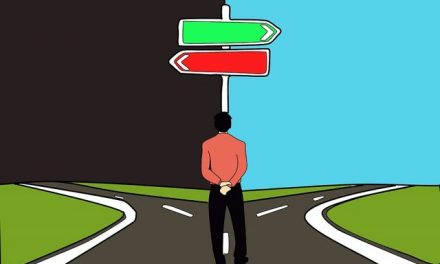
Hatred and cruelty are taught, reinforced, and shaped by neglect, trauma, and unhealed suffering. The question for society is not whether we can punish wrongdoing (we always can) but whether we are willing to invest upstream. This is where intervention actually prevents wrongdoing before it occurs.
Do we want to pour resources into trauma-informed education, research and the practical application of TIC tools in families, schools, social services, and institutions? Or do we want to invest instead in a punitive model of criminal justice that responds only after harm has been done?
Too often, we hold so tightly to traditional notions of justice and accountability that we fail to see the possibilities for prevention. We focus on what people do instead of what happened to them, and in doing so, we leave generations exposed to cycles of suffering that could have been interrupted. Trauma-informed care does not eliminate responsibility; it enhances it while preventing avoidable harm.
If we want safer communities, healthier individuals, and fewer tragedies, the answer is clear. We must treat trauma as a public health priority, embed compassion in our institutions, and act early. Otherwise, we settle for a reactive world, where preventable suffering becomes inevitable, and the consequences fall on all of us.
Socrates, Trauma, and the Good
The logic of trauma-informed care echoes one of the most famous insights in all of philosophy. Socrates argued that “all wrongdoing is committed out of ignorance; those who truly know the Good will inevitably follow it.” Harm arises when people are unaware of what is right, when suffering and confusion obscure the path to ethical action.
Trauma-informed care operates on the same principle. It is designed to illuminate the Good, to help people learn, understand, and internalize healthier ways of coping and relating. By addressing trauma, teaching emotional literacy, empathy, and resilience, TIC combats the ignorance that allows pain to perpetuate itself and that can transform unresolved suffering into cruelty, hatred, or violence.
In this sense, trauma-informed care is profoundly ethical. It is the practice of giving people the knowledge, tools, and support to see the Good in themselves and others, and to choose it even in the face of adversity. Compassion of this kind is not sentimental. It is preventative—it is proactive. It is the most revolutionary form of human courage: to see suffering, understand it and act before it can escalate into destruction.
Prevention is not the absence of justice; it is the courage to act before suffering hardens into harm. Trauma-informed care gives us that courage.
Photo: Pixabay
Editor: Dana Gornall
Did you find this interesting? You may also like:
You’re Not Crazy. You’re Grieving: What Happens When a Relationship Ends in Betrayal and Trauma
Comments

George’s essays have appeared in publications such as The Good Men Project, The Buffalo News, The Rochester Democrat & Chronicle, and many more. A poet at heart, his work often blends memoir, philosophy, and theological reflection, rooted in the belief that language can be both a balm and a spark.
Whether reflecting on the writings of Marcus Aurelius, the parables of Jesus, or the mindfulness of a Jain monk sweeping the ground before them, George writes to make space for wonder, doubt, and dialogue.
He joins The Tattooed Buddha as a regular columnist to explore themes of death, inner peace, activism, grief, and contemplative life in a world on fire—and to ask, again and again: How can we live as if everything we do matters?
- Who Are You Beyond Your Labels? - August 19, 2026
- From Space Earth Looks Almost Unchanged, From Within Every Moment is an Opportunity - July 20, 2026
- Trauma and Remembering How to Heal - July 9, 2026